The Office of Sustainability works to create a just, equitable, livable, resilient, and low carbon community. We center the priorities of frontline communities and advancing sustainability efforts within the County, region, and state.
Review our 2025 accomplishments here or read below.
Energy
- Co-led a coalition that doubled funding for utility bill assistance grants for Pacific Power and PGE customers state-wide, including a ~$5.3 million increase for Multnomah County. The new law includes biennial adjustments to determine if funding should increase.
- Secured temporary disconnection protections amid disruptions in federally funded benefits and heightened immigration crackdown for households with low incomes or certificates showing they need energy utility service due to medical reasons, as well as households that self attest to financial hardship. Protections included $500 for utility debt relief for very low-income households.
- Supported coalition that passed the Fairness & Affordability in Residential Energy Act (HB 3719), a new law that creates stronger protections for customers in energy utility rate-making proceedings.
- Contributed to the development of the Oregon Energy Strategy, including by participating in the environmental justice workgroup that advised the process.
- Co-led coalition that secured stronger permanent rules protecting customers at risk of disconnection, including stronger protections around extreme weather events and additional support with utility debt for households with very low incomes.
- Continued oversight of PGE and Pacific Power decarbonization plans, highlighting the importance of utilities meeting their statutory clean energy obligations.
- Continued two-year partnership with the Community Energy Project and Líderes Naturales for weatherization and energy access outreach to Latine, Spanish-speaking residents of East County, supported by ~$100,000 grant.
- In collaboration with energy justice non-profit advocates, co-facilitated 12 meetings for the third year of the Energy Justice Leadership Program, a program that fosters collaborative learning between 20 grassroots community advocates and energy justice advocates and supports grassroots community advocacy in energy policy.
- OS staff presented at the annual Citizen Utility Board Conference and the NW Energy Coalition’s Conference on the importance of low income utility bill protections.
Climate Crisis Response & Resilience
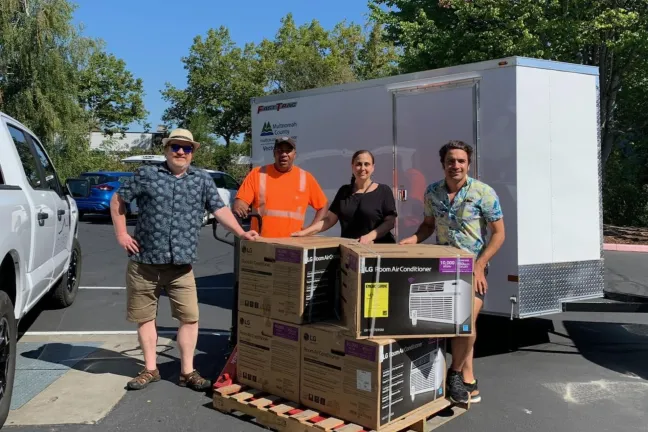
- During a heat emergency, OS and partners distributed over 100 window AC units to households in need, including seniors & other at-risk populations throughout the county – including Gresham, Wood Village and Portland’s Gateway neighborhood.
- Presented the community discussion draft of the Climate Justice Plan to the Board of County Commissioners and published the draft for public comment.
- Spearheaded public engagement for the draft plan, generating 597 in-person connections to ensure diverse community representation.
- Coordinated 24 engagement events on the draft Climate Justice Plan, resulting in 46 survey responses, and 39 written comments and presented findings to the Board of County Commissioners.
- Hosted 12 community forums on the draft Climate Justice Plan, convening 253 participants across industry, government, non-profit organizations, and the general public to gather actionable feedback.
- Opposed roll backs to federal climate protection rules.
Engagement & Partnerships
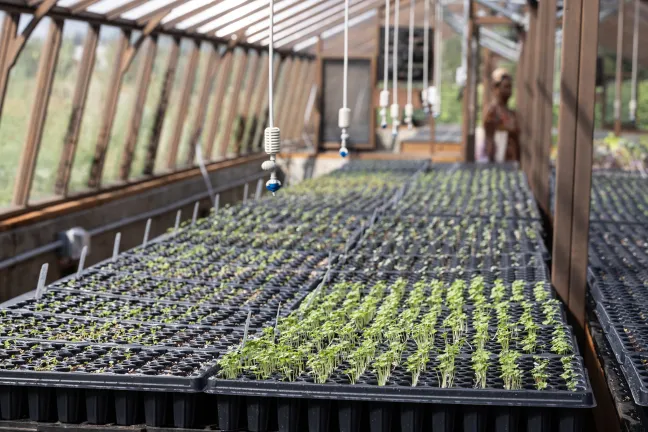
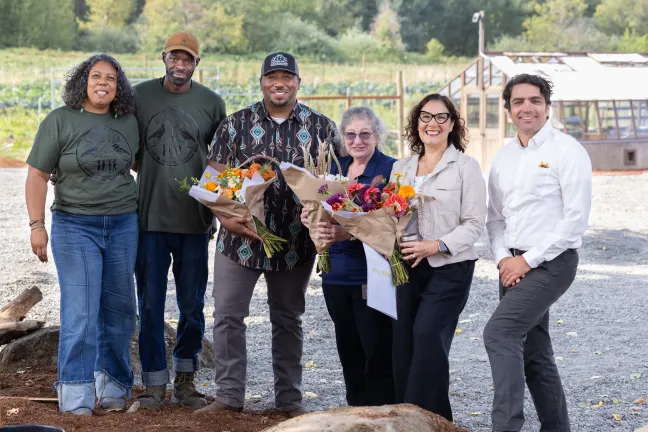
- Celebrated with Feed’em Freedom the reopening of the CROPS farm with improved infrastructure and new community partnerships.
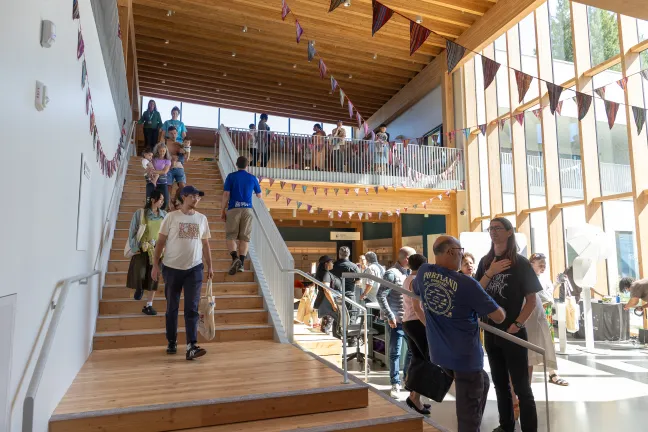
- Co-hosted the community resource fair, “Learn, Share, Do,” in SE Portland with over 400 attendees connecting to services, like bill discount programs, and climate resilience resources like air cleaners.
- Hosted a total of 18 committee and subcommittee meetings for Multnomah County’s Advisory Committee on Sustainability and Innovation. Committee members discussed topics related to sustainability, climate and energy justice, resilience, and air quality. They provided crucial feedback to the Office of Sustainability, and developed the 2025 Annual ACSI Letter.
- Participated in two Sustainable Building Week events, including a presentation on the draft Climate Justice Plan and Library Bond Project sustainability, and the “Co-Designing Resilient Communities” panel.
- Partnered with the Coalition of Communities of Color on the Modernizing Anti-Racist Data Ecosystems for Health Equity (MADE) project, to increase the use and impact of community data in environmental justice policies and programs.
- Secured a small grant to host a public event on how to solve harmful algal blooms in the lower Willamette River.
- Silvia Tanner, Sr. Energy Policy and Legal Analyst, appointed to the Oregon Environmental Quality Commission by Governor Kotek, and John Wasiutynski, Office of Sustainability Director, appointed to the Oregon Climate Action Commission.
Air Quality
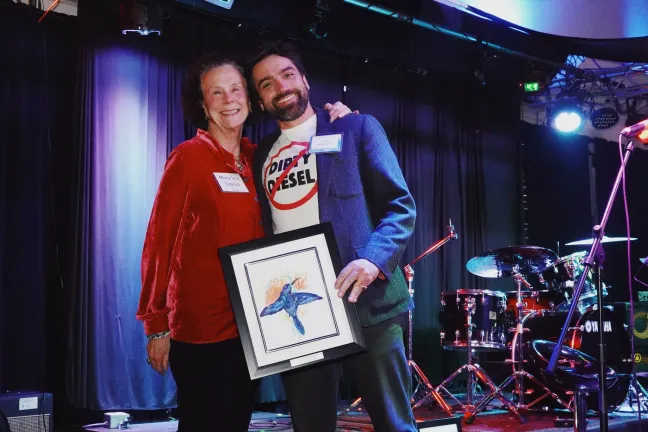
- 2025 Recipient of the Clean Air Champions Award from Neighbors for Clean Air.
- The Health Department, with support from OS, ran a gas powered leafblower trade-in program that helped 35 small businesses replace 97 noisy and polluting gas powered leaf blowers with 98 battery electric leaf blowers. This action prevented the release of more than a third of a ton of fine particulate matter annually and eliminated nearly 95 tons of carbon dioxide annually.
- Continued to implement the Clean Air Construction Program, that added a ninth local government participant, the City of Hillsboro, in 2025. As of July 1, 2025, 220 companies were registered with the program, 64 of which were COBID-certified (29% of registered companies) and there were 67 active projects.
Enterprise Sustainability
- County enterprise related greenhouse gas emissions have been reduced 68% from the FY07 baseline through acquisition of clean energy and a 20% reduction in total energy use.
- Continued to work in partnership with DCA and other departments to broadly implement the Board’s internal goals on enterprise decarbonizations and sustainability, including convening the countywide Climate Leadership Team, co-developing both fleet and existing building decarbonization strategies.
- Supported the achievement of the County’s green building and fossil fuel free buildings commitments at Library Bond funded projects, including developing the County’s first battery energy storage system to be hosted at the East County Library.
- Worked with DCA and MCL to pursue outside funding to reduce the upfront costs of innovative energy projects. This included securing federal incentives for the Library Operations Center, seeking utility rebates, and applying for a significant grant (pending) to develop a community solar project at the CROPS farm that will support farm operations and reduce utility bills for low income households and County operations.