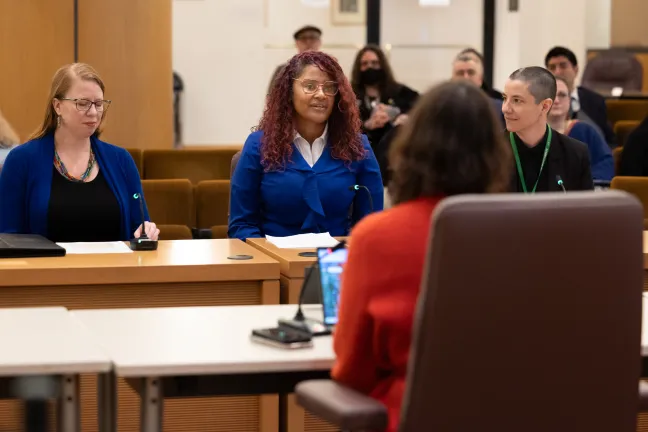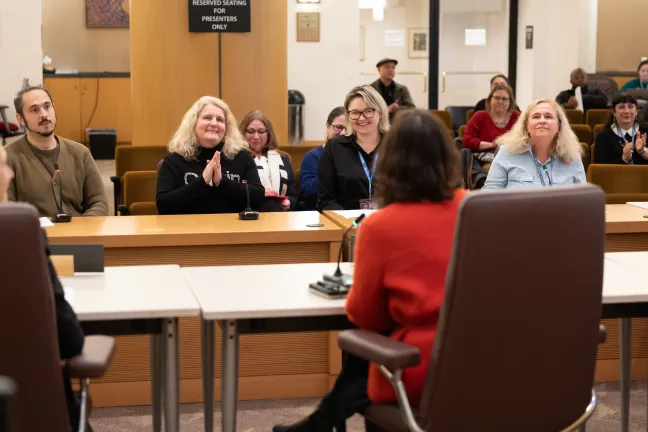
The Multnomah County Board of Commissioners on Wednesday, Jan. 14, celebrated its first monthly Proclamation Day of 2026 by approving two proclamations.
“Proclamations really serve to honor, celebrate, and recognize groups and individuals for their contributions and achievements, and to raise awareness about significant issues affecting our community here in Multnomah County,” said Chair Jessica Vega Pederson, who introduced the two proclamations.
Human Trafficking Awareness and Prevention Month
The Board proclaimed January 2026 as Human Trafficking Awareness and Prevention Month in Multnomah County. The proclamation was co-sponsored by Commissioner Meghan Moyer and the Multnomah County District Attorney’s Office.
This proclamation is an “opportunity to shine light on the issue of human trafficking and help dispel the common myths and misconceptions around that,” Chair Vega Pederson said.
The proclamation highlights that victims and survivors of sex trafficking tend to be those who are in vulnerable circumstances — “primarily children in our welfare and juvenile justice systems, including foster care, runaway and homeless youth, and unaccompanied youth from other countries,” according to presenter claire barrera, a program specialist with the Domestic and Sexual Violence Coordination Office, who read a portion of the proclamation.
Other people who are at higher risk of being victims and survivors of sex trafficking include American Indians and Alaska Natives (particularly women and girls); people with mental health or substances use issues; those who are without full citizenship and/or are in the process of obtaining legal status; people with limited English proficiency; people with disabilities; LGBTQI+ individuals; and victims of intimate partner violence or other forms of domestic violence.
The proclamation also highlighted Multnomah County’s work is to support those who are victims, or at high risk, of trafficking. In Fiscal Year 2025, New Avenues for Youth’s New Day program, funded by the County, served 184 youth identified as sex trafficking victims or at high risk of being trafficked, providing outreach, housing, mental health support and mentorship services. Since starting in 2018, the program has served more than 750 people.
The District Attorney’s Office’s Human Trafficking Team has been working with victims and victim advocacy groups to ensure that funds seized from online trafficking operations are returned directly to survivors.
Since launching in 2009, the team has successfully prosecuted more than 1,000 traffickers and buyers, while more than 2,000 survivors have been identified and/or provided services.
Following recommendations from its Community Advisory Board — part of the Multnomah County Sex Trafficking Collaborative — the County is set to launch a specialized initiative in 2026 to lower barriers to shelter and housing for sex trafficking survivors. This effort includes the rollout of a new website featuring a resource map designed to streamline the way survivors and service providers navigate available anti-trafficking services.
“The commitment that everyone who participates in this work has to serving survivors, but also uplifting the voices and experiences of those survivors, is incredibly important, so thank you all,” Chair Vega Pederson said.
Emily Hyde with the Victim’s Assistance Program of the District Attorney’s Office and Wenseay Seay, a former member of the Multnomah County Sex Trafficking Community Advisory Board and Call to Safety staff member, also contributed to reading the proclamation.
Slavic and Eastern-European Heritage Week
The Board also proclaimed the second week of January 2026 as Slavic and Eastern European Heritage Week in Multnomah County. The proclamation was co-sponsored by Commissioner Shannon Singleton and the County’s Immigrants and Refugees Employee Resource Group (ERG).
Chair Vega Pederson thanked the ERG, especially for their role during the recent unease and instability created by federal actions, saying, “The dedication that you have had and the advocacy on behalf of employees for immigrants, refugees and allies have been so valuable to the County’s response to the federal government’s attacks on our communities.”
“You all have been absolutely instrumental in the work we’ve done around sanctuary policy, but also in ensuring that our services are accessible for folks that are impacted by the current attacks,” added Commissioner Singleton. “The Slavic and Eastern European community needs to hear solidarity and support from their neighbors and from leaders. So I just want to say I stand with you in the hard times but also in times of celebration like today.”
“Slavic and Eastern European residents and organizations in Multnomah County have contributed to community life through business, education, public service, arts, faith-based involvement, volunteerism, and cultural events that foster connection and belonging among county residents,” said Karina Rutova, a program specialist for the Gateway Center for Domestic and Sexual Violence Services and the co-chair of the Immigrants and Refugees Employee Resource Group, reading from the proclamation.
The proclamation, Rutova said, serves to honor cultural identity and aims to deepen a sense of respect and awareness throughout the community, through which the County hopes to create more opportunities for multicultural exchange, intergenerational learning and shared community celebration.
The proclamation also calls upon community members to “join in activities and celebrations that recognize and honor the heritage, resilience and contributions of Slavic and Eastern European communities throughout the County.”
Also reading portions of the proclamation were Irina Klimenko, a Slavic and Eastern European program specialist with the Community Partnerships and Capacity Building program and a member of the ERG; Nellie Salvador, the director of the Immigrant and Refugee Community Organization’s Slavic and Eastern European Center and co-chair of the Coalition of Slavic and Eastern European Organizations (CSEEO) group; and Timur Holov, a project director for Slavic Community Center Northwest and a CSEEO co-chair.