Decisions related to energy utility services typically happen in spaces removed from the community members who those decisions impact — namely the everyday residential consumer, especially people with limited means. However, in the last three years, a noticeably higher number of community members have voiced their thoughts, questions, and concerns to energy decisionmakers.
Various factors have supported this surge in interest: rising utility rates; increased awareness of the many impacts of our energy system; and the work of partner organizations like the Citizens Utility Board of Oregon, the Community Energy Project, the Coalition of Communities of Color, and Verde that prioritize outreach and raise public awareness of important energy decisions.
Also driving this emerging engagement is the Energy Justice Leadership Program and the community leaders participating in it. Together, the participants have been working to make our energy system better serve Oregonians.
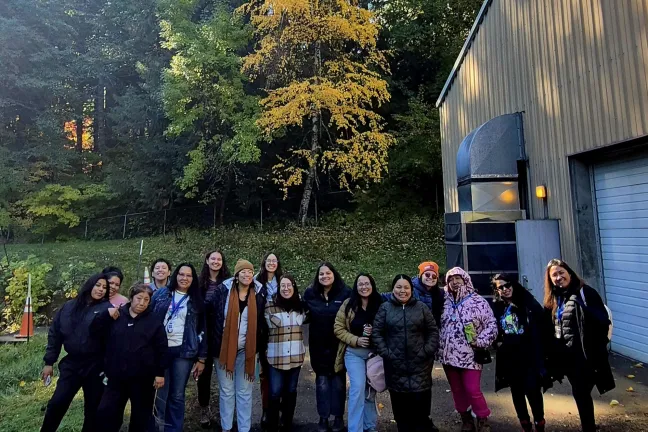
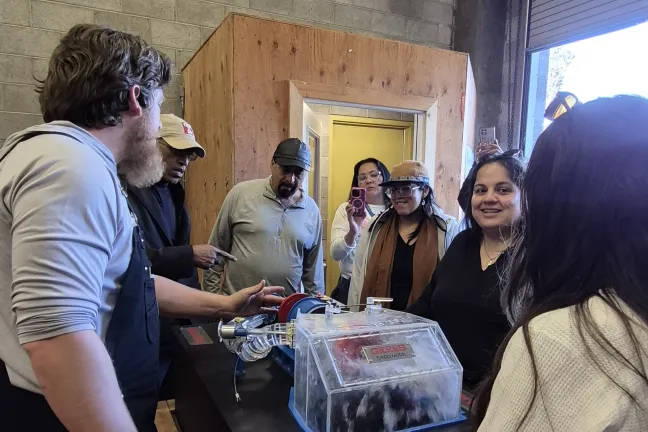
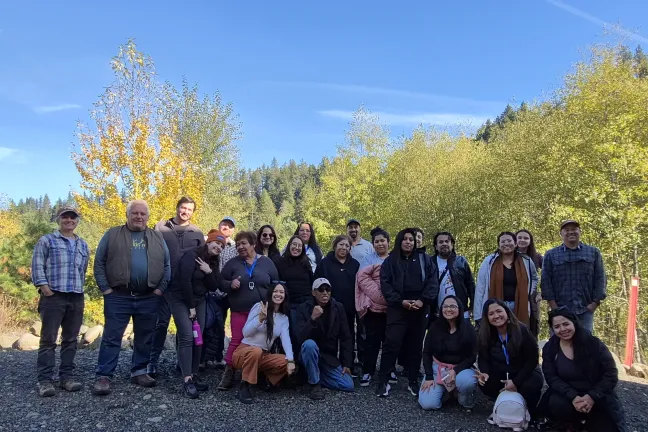
Now in its third year, the Energy Justice Leadership Program brings its participants, known as Energy Justice Leaders, together with advocates who engage in energy justice conversations as part of our work. The program fosters mutual learning about policy decisions ripe for community input, and about the priorities, needs, and solutions that the leaders see as crucial for the communities they work with. The leaders participating in this program are grassroots community activists from all over the state who bring a wide variety of perspectives and share the goal of making sure that decisions around Oregon energy utilities serve environmental justice communities and center their needs. Participants over the years have come from a stunning range of experiences and identities, including youth, elders, Tribal citizens, BIPOC community members, people living in rural communities, people experiencing disability, people with low incomes, environmental activists, local community activists, and more.
The obscure world of energy utility regulation
Multnomah County residents get their gas and electricity from utilities that have monopolies over their service territory, or the exclusive right to serve a particular area. That means that if a community member is unhappy with their gas or electric utility, they cannot switch to a competitor.
To make sure that customers are served well, states like Oregon established public entities to regulate these utilities. In Oregon, that regulator is a state agency called the Oregon Public Utility Commission (OPUC). The OPUC’s three commissioners make final decisions on many utility-related matters, including whether to approve utilities’ requests to raise rates.
The OPUC holds meetings to hear from interested parties before making decisions. However, few people know about the commission, and even fewer participate in its complex and jargon-filled processes. Although a growing number of advocates representing environmental justice communities participate (and encourage community members’ participation), those representing the interests of industry are often significantly better resourced to attend and influence the meeting outcomes.
Supporting community leadership in energy decision making
Because of the way meeting awareness, participation, and attendance is tilted, OPUC commissioners do not hear often enough from community members most impacted by their decisions. But the Energy Justice Leadership Program has set out to change that.
Energy Justice Leaders are impacting Oregon energy policy. They have voiced their communities’ needs and concerns directly to the OPUC, as well as energy utilities and the Legislature, helping shape policies and outcomes on resilience, rates, the landscape faced by low-income customers, clean energy planning, and more.
The program’s model breaks down accessibility barriers in energy policy decision-making. The Multnomah County Office of Sustainability is proud to facilitate this program along with the Coalition of Communities of Color, Verde, the Oregon Just Transition Alliance, and the NW Energy Coalition.
“This Program has increased energy decision-makers’ and advocates’ awareness of the lived experience and priorities of community members that they would often not get to hear and learn from,” said Silvia Tanner, Senior Energy Policy and Legal Analyst at the Multnomah County Office of Sustainability. “As an energy justice advocate, I owe much to this program and to the expertise that the leaders so generously share.”
As the Office of Sustainability’s co-facilitator of the program, Silvia has been engaged since Day One and has co-designed curriculum and materials, presented on utility-related topics, led participants conversations in Spanish and English (translating and interpreting from English to Spanish when needed), contributed to fundraising applications, and helped build how the program engages with participants and how the facilitators work together.
Yet despite significant progress on accessibility, much work remains to ensure that OPUC processes are accessible and well-suited to incorporate the feedback and needs of impacted community members who engage. As a result, the programs’ participants and facilitators continue to dedicate significant time and energy to supporting more accessibility at the OPUC.
The Energy Justice Leadership Program is environmental and energy justice in action. The Office of Sustainability is committed to this program because we believe in the power of rooting policy in the realities of the people they impact — an essential part of our mission of centering the priorities of frontline communities.
“The clean energy transition is vital to protecting our climate and getting to a stronger and more stable economy, but we need more than decarbonizing our energy systems,” said Silvia.
“We need a just energy transition that recognizes the needs and realities of all of our community. Getting to 100% while too many in our community continue to be disconnected is not how we should define success.”
The Northwest Energy Coalition has been leading this work with support from the Office of Sustainability and other partners. Funding from Portland Energy Conservation (PECI) and Meyer Memorial Trust has supported this program in its last three years. Meyer Memorial Trust recently announced that it will provide important funding, with NW Energy Coalition as the lead organization, to sustain the program for an additional two years. We look forward to securing additional resources to ensure the continued success of the Energy Justice Leadership Program, and to two more years of ensuring that grassroot community voices shape our energy future!