Black History Month recognizes that the fight for a healthy planet is inseparable from the fight for civil rights. Black history is a story of resistance and perseverance. Black Americans have long been at the vanguard of the environmental justice movement.
First recognized in Warren County, North Carolina, civil rights activists were the first to identify the systemic dumping of toxins in their neighborhoods as environmental racism. Today, as we face attempts to sanitize or erase these narratives, it is more important than ever to remember that history determines how we act in the world. By centering Black stories and leadership, we ensure that the transition to a green future is just, inclusive, and built to last.
True climate justice requires more than just "saving" communities; it requires shifting power. We are highlighting the work of local leaders who are building:
- Community Governance: Black residents co-designing local solutions.
- Economic Equity: Prioritizing Black-owned businesses for contracts.
- Leadership Pipelines: Creating pathways for Black leadership in the emerging green economy.
- Knowledge Integration: Honoring traditional Black ecological knowledge alongside modern science.
- Asset-Based Approaches: Building on existing community strengths rather than solutions.
Leading Voices in the Movement
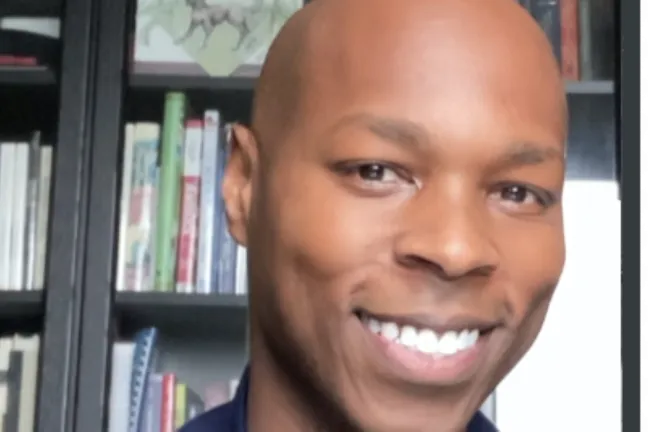
Derron Coles, PhD | Principal Consultant, Kijani Collective
With over 24 years of experience, Dr. Coles is a learning strategist and engineer focused on culturally responsive competency development. Through his firm, DRC LS, he helps green sector organizations solve equity and inclusion challenges.
“We're working toward a Portland where Black residents have ownership. Ownership of resilience infrastructure, green sector businesses, climate knowledge, and the policies that shape our future. This is about economic development, but it's fundamentally about self-determination and ensuring our community not only survives climate impacts but thrives and leads in shaping climate solutions.”
The Kijani Collective is a Black-led coalition advancing climate resilience through collective action and economic empowerment. Their major initiatives include:
- Black Coalitions Summit: A strategic convening to develop a unified economic plan centered on Black ownership of land, housing, and infrastructure.
- Resilience Hub Network: Building a "For Us, By Us" (FUBU) ecosystem of Black-owned emergency spaces equipped with solar power and retrofitted by Black contractors.
- Black Climate Ecosystem Study: Mapping barriers and pathways for Black innovators while creating a curated database of green-sector business supports.
- Policy Advocacy Training: Launching in Summer 2026 to equip Black youth and community members with the tools to influence climate and utility regulations.
- Black Voice Amplification: Using multimedia and story maps to center Black contributions and celebrate community-led climate resilience strategies.
You can follow and support this organization and Dr. Coles' work by visiting the Kijani Collective website.
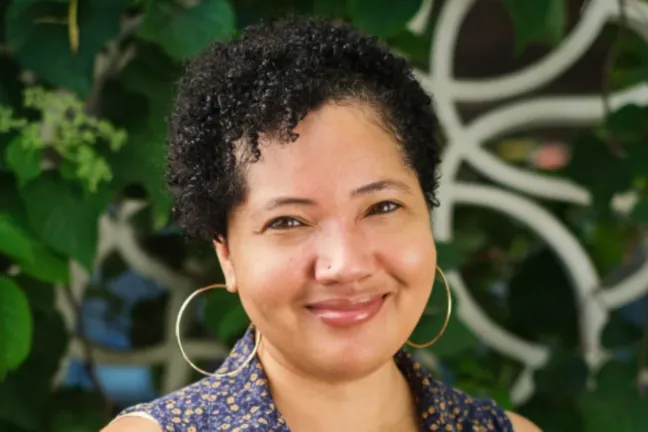
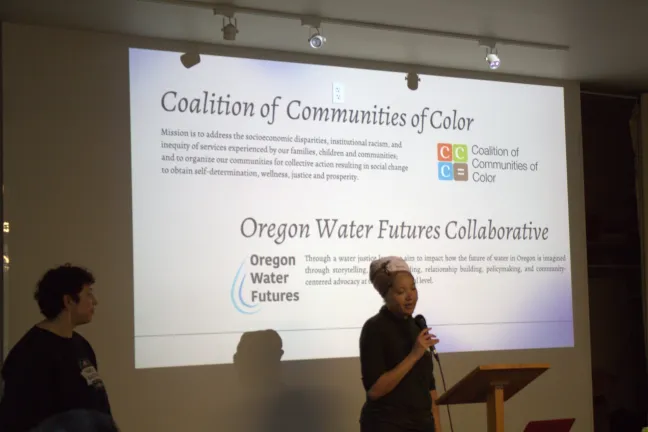
Taren Evans | Environmental Justice Director, Coalition of Communities of Color (CCC)
Taren Evans brings over a decade of experience in collaborative governance and urban planning. Her work at the CCC focuses on anti-displacement and community-driven policy development, ensuring that climate action is rooted in equity. For Taren, environmental justice is inseparable from the stories we tell about our past and our future.
Taren emphasizes that Black history is a vital part of the American story—one defined by resistance, perseverance, and struggle. By centering these narratives, we gain the clarity needed to challenge systems where what is "sanctioned by law" does not align with actual justice.
“So much of what we believe and how we act in the world is determined by the stories we tell ourselves, or the stories other people tell us.”
The Coalition of Communities of Color operates on three vital pillars:
- Research Justice: Centering qualitative data and community voices to counter narratives that often misinterpret the experiences of marginalized groups.
- Environmental Justice: Pushing for policy that corrects the "painful contradictions" of American history.
- Collective Advocacy: Interrogating existing power structures to ensure laws align with true justice.
The CCC is currently spearheading critical efforts to protect community-led climate investments and enhance local safety:
- Protecting PCEF Funds: Leading a legal challenge to block a ballot measure that seeks to divert 25% of the Portland Clean Energy Fund (PCEF) toward police expansion. You can support this fight through the Protect PCEF Fund.
- CEI Hub Advocacy: Partnering with the Sierra Club and Oregon Physicians for Social Responsibility to address risks at the Critical Energy Infrastructure (CEI) Hub, where 90% of Oregon’s liquid fuel is stored.
- Resilience Workshops: Hosting community-driven emergency preparedness sessions in North Portland to influence city policy and update safety codes for industrial zones.
You can follow and support this organization and Evans' work by visiting the Coalition of Communities of Color’s website.
To achieve true climate justice, we must learn from this history and follow the lead of Black environmental pioneers. Multnomah County’s Office of Sustainability is currently developing a Climate Justice Plan that centers this necessity. By addressing the legacy of redlining, economic disenfranchisement, and the deliberate industrialization of Black neighborhoods, this plan seeks to transform historical awareness into reparative action—ensuring that the path toward a greener future is paved with equity and self-determination.