

Air pollution affects everyone’s health, but can impact some people more than others. In Multnomah County, we are exposed to air pollution during some parts of the year.
Most of the time, our air quality is good. But it depends on the season, where people live, and pollution spikes from wildfires and other causes. It also matters what the air quality is like inside our buildings and homes.
Where people live and how their neighborhoods are built can make it harder for them to protect themselves from air pollution.
Health Effects of Air Pollution
Air pollution can irritate your lungs, eyes, nose and throat. Unhealthy air can cause coughing, shortness of breath, sore throat, itchy or watery eyes, headaches and tiredness.
Long-term exposure to air pollution can cause:
- Asthma and respiratory illness
- Heart disease and heart attacks
- Cancer
- Low birth weight, premature birth and infant mortality
- Early death
- Increased hospitalizations
To keep unhealthy air from making you sick, try to get away from the source. For symptoms that don’t go away, contact your doctor or clinic.
Sources of Air Pollution
Air pollution is often invisible and odorless. Sometimes you can see or smell it, such as smoke from a wildfire or chimney, or exhaust from a vehicle. Here are the sources we’re most concerned about:
Wood Smoke
Burning wood produces smoke, the leading cause of air pollution in Multnomah County. Wood smoke also increases cancer risk. Ways to reduce wood smoke
Wildfire
Wildfire seasons in Oregon are bringing more bad air days from wildfire smoke to our region. Protect yourself from wildfire smoke
Ozone
Also known as smog, ground-level ozone is a gas. It’s created when chemicals and pollution from gas-powered engines interact with sunlight. Ozone is most likely to reach unhealthy levels on hot sunny days in urban environments.
If it’s hazy or smoggy outside, it’s a good idea to check the air quality index for high ozone. Stay inside and avoid driving if ozone levels are unhealthy.
Diesel
Diesel is the leading fuel used to move freight. Exhaust from diesel-fueled vehicles, trains, ships and construction equipment is toxic and increases cancer risk.
People who live near freeways, factories, shipyards, airports, distribution centers and railroads are harmed the most. Health effects of diesel exhaust
Indoor Air Pollution
We spend most of our time indoors. Yet, there are many things we use and bring into our homes that can make indoor air unhealthy.
Gas appliances and anything you burn (smoking, candles, wax melts) emit harmful gases. New furniture and construction materials (plywood, flooring, paint) give off toxic fumes and dust. Cleaners, excess moisture (mold), allergens and radon gas from underground are also sources. Steps to improve indoor air
Find air pollution rankings for our region
Who Is Most at Risk
Children and older adults are especially vulnerable to air pollution, but it can also affect healthy adults.
- People who live near sources of air pollution
- Children
- Pregnant people
- Older adults (ages 65+)
- Those with asthma, lung or heart conditions
- Those who work outside or are active outdoors
- Those who live outside or are unhoused
What You Can Do
Protect your health
- Track local air quality and fires
- Limit time outside when air is unhealthy
- Use an air cleaner indoors
- Inspect and clean gas stoves and heating devices
- Switch to electric for heating and cooking
- Ventilate rooms when you cook or shower
More tips for keeping your home healthy
Protect Your Community
A few simple things can make a positive impact on your community:
- Avoid burning wood
- Drive less (use transit, carpool, combine errands) and earlier in the day
- Check on others when air is unhealthy
- Share air quality information with friends, neighbors and on social media
Want to do more? Past and present government policies and decisions directly impact air quality and shape our lifelong health. Get involved and use your voice to help protect the air for everyone!
Have You Seen Our Air Quality Monitors?
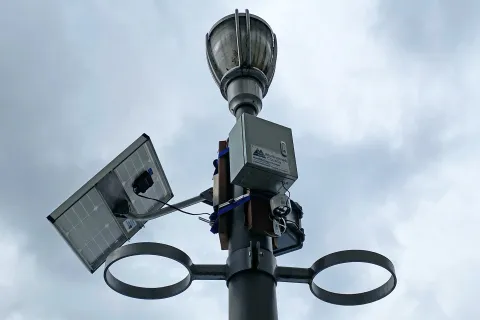
The Health Department is piloting the use of air quality monitors in south Portland. The monitors will measure particulate matter. They may help us to better understand the quality of air people breathe nearby.
We’re working with the City of Portland’s Bureau of Transportation to install monitors starting on February 18, 2026. Data collection will begin shortly after they're installed.
Our air quality monitors have solar panels and County identification. You might see them on streetlight poles in these locations:
- East side of S Moody St, north of S Bancroft St (near the REACH building parking garage access)
- Southeast corner of S Moody and Bancroft Sts (near the old school play area)
These monitors will be making a test run for at least 30 days. We want to see how well they work at detecting various airborne substances.
These monitors won’t be able to pinpoint the chemical sources of pollution on their own. But we can compare this data with regional data to make more accurate conclusions about where pollutants come from and how long they last.
Depending on particle size, wind patterns and chemical composition, the sensors may or may not be able to capture data from specialized aerosols, such as tear gas.
Our long-term goal is to make this data available to the community. The Health Department will first test the findings for accuracy before releasing them to the public.
Resources
- Check air quality (AirNow)
- Air Quality and Outdoor Activity Guidance for Schools and Youth Programs (PDF)
- Wildfire Smoke Protection Rules for Outdoor Workers (PDF)