
Pdf version of report
Serving Multnomah County
Mission of Community Support
The Multnomah County Ombudsperson is an independent, impartial resource for county residents who need assistance resolving disputes related to county programs, departments, and services. In November 2022, over 85% of Multnomah County voters passed a Charter amendment creating the Ombudsperson function within the Multnomah County Auditor’s Office.
The Ombudsperson responds to reports made by the public, helps resolve issues, and provides referrals to other resources when appropriate. The Ombudsperson can also assist the public by conducting investigations into administrative acts of the county and recommending changes. Sometimes the recommendations are part of a publicly issued report. Other times, recommendations are made informally. Informal recommendations are a part of the day-to-day work of the Ombudsperson and are used to address unique situations. When a more widespread, systemic issue is identified, the Ombudsperson will conduct a more in-depth investigation resulting in formal recommendations as part of a public report.
As a function of the Auditor’s Office, the Ombudsperson works to promote accountable and equitable county government. The Ombudsperson is tasked with ensuring that residents are treated fairly in their interactions with Multnomah County.
Equity Lens Update
In the 2024 annual report, the Ombudsperson and the Ombudsperson Intake Specialist highlighted the critical role of applying an equity lens during their intake process. Collaborating with the Auditor's Office's Diversity, Equity, and Inclusion Committee, our team focused on strategies to ensure Multnomah County residents feel heard and supported.
We strive to provide community members with accurate information for both county and non-county concerns, connecting them with appropriate resources. We listen carefully to all information from complainants and other involved parties to gather a complete understanding of each situation. This approach allows us to identify inequities and gaps in communication and information.
Community Outreach Overview
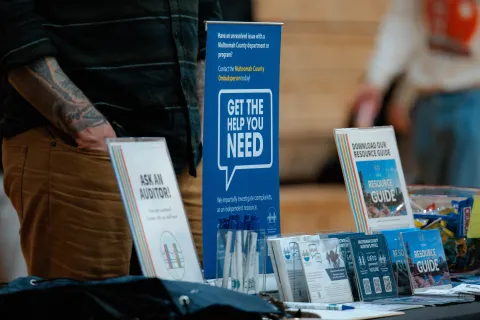
In 2025, the Ombudsperson, the Ombudsperson Intake Specialist, and other members of the Auditor’s Office attended a total of 30 community engagement events.
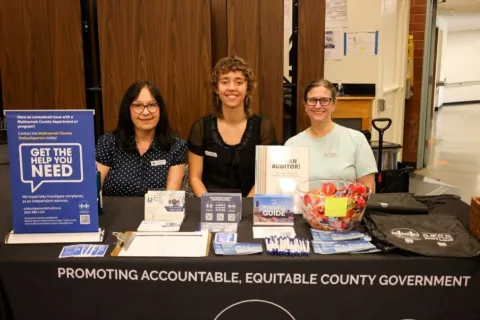
The former Ombudsperson Intake Specialist, Kate Milne, played a crucial role in enhancing the Ombudsperson's outreach and effectiveness. Through their dedicated efforts, the Ombudsperson successfully engaged with community members in-person and through a variety of communication channels. The Intake Specialist's work extended beyond direct community engagement, identifying and significantly expanding the Ombudsperson's networks (e.g., governmental, stakeholder, community partners, etc.). In September 2025, Ombudsperson Intake Specialist Kate Milne moved on to pursue opportunities in the non-profit sector.
In October 2025, the Auditor’s Office hired a new Ombudsperson Intake Specialist, Gelsi Tuz-Uxul. Gelsi began her journey in the office in 2023 as a communications and engagement intern with the Auditor’s Office.
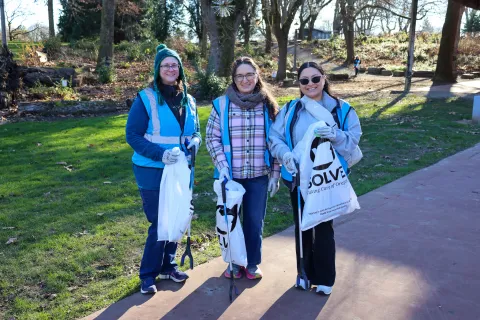
Toward the end of the year, the Intake Specialist broadened and organized a list of valuable networks and essential resources outside the county, and with county departments. During the federal government shutdown and its impact on SNAP benefits, the Intake Specialist was able to collect, organize, and distribute resources and information for those who sought our services.
By utilizing these connections and resources, the Ombudsperson gained access to a broader range of support, information, and collaborative opportunities, ultimately strengthening the team’s ability to address community concerns and navigate complex issues more effectively.
2025 Overview
Intake Increase
We handle reports in one of three ways: resolution through Ombudsperson mediation or assistance, referral to additional resources that are better suited to resolve the issue, or through a formal investigation by the Ombudsperson.
In 2025 we saw a significant increase in the use of our services, with 475 total reports filed, substantially exceeding the 203 reports recorded in 2024. It is important to note that not all reports are complaints. The reports included questions, as well as requests for information and other forms of assistance.
Of the 475 reports, 159 included situations where we did not have accurate contact information or did not receive a response to our attempts to contact the person. This meant that we received enough information to provide assistance on 270 cases.
Below is detailed information on the 270 cases, which included 161 county-related cases.
Of the 270 cases, 59% (in blue) were county-related and 40% (in green) were non-county related. There also was a 1% caseload of information requests
This data suggests a growing awareness of our services among the public and county staff.
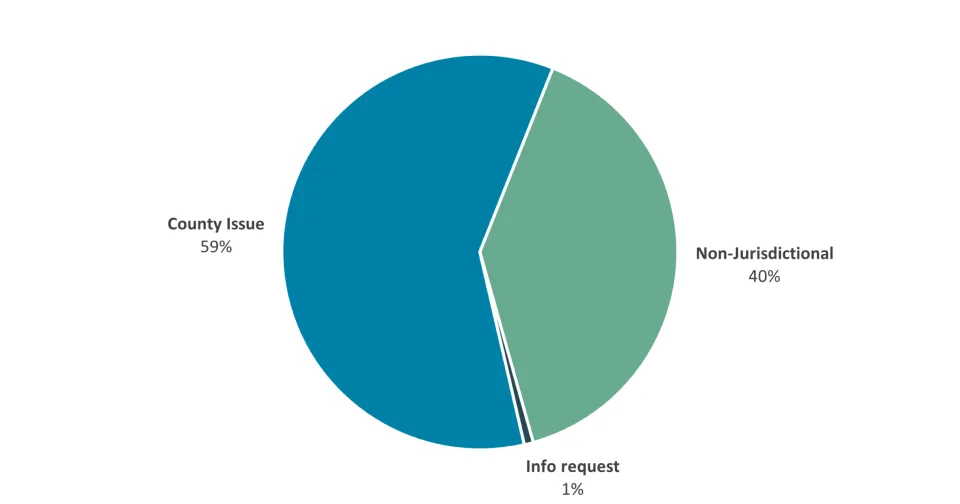
“County-related” refers to cases that are under county jurisdiction, meaning matters that can be addressed through county departments. For example, if someone requested a grievance form for a county-funded shelter, we can obtain that information from the Homeless Services Department and provide the information to the requestor. We can also work directly with the shelter, asking them to provide the information directly to their client.
“Non-county related” means matters outside our jurisdiction. For these cases, we proactively research issues and potential solutions, then provide relevant information and referrals to external organizations. Additionally, the Ombudsperson's internal and external networks allow the team to directly reach relevant authority figures, including other ombudspersons, to address issues, such as a lack of follow-up, or other concerns.
Similar to non-county cases, our team offers basic assistance to those who reach out requesting information. This assistance includes, but is not limited to, providing direct links or contact information for county resources applications for county services, and other relevant resources. We are committed to supporting people with any questions or concerns they may have.
Contact Methods Overview
This year, we were able to identify the specific ways community members contacted us for assistance. Most people reached out to us by phone, with 287 phone calls to our team. We found that community members used the audio format more frequently for explaining their situations, potentially suggesting phone calls facilitate a smoother process due to the direct verbal engagement with community members.
Top five ways people contacted the Ombudsperson office
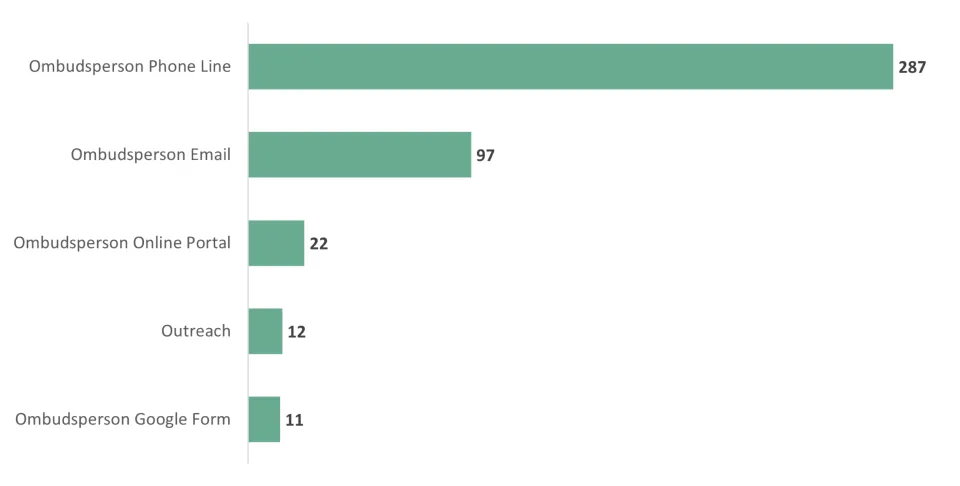
The Ombudsperson email received 97 reports. Some people preferred to receive information, such as links or contact information, by email rather than verbally, which helped preserve the accuracy of the information provided.
In addition to telephone and email, we offer two secure online portals for submitting reports or raising concerns. The variety of contact methods ensures that people can select the communication channel that best suits their comfort level and nature of their report, ensuring a safe and accessible reporting process. Additionally, our presence in the community during outreach efforts allows us to offer our services in person.
While we may not always be able to provide information on the spot, our team can take a report in-person and follow up using the information that was provided. We connected in-person with 12 community members who needed assistance, and our goal for the upcoming year includes spending more time in the community to assist those who approach our tables and to provide more insight in the areas in which we assist.
County-related cases
We handled a diverse range of cases in 2025. County-related reports accounted for more than half of our total intake, involving various reports regarding multiple county departments. Of the 270 cases we handled, 161 (59%) were county related.
The Department of County Human Services had the most cases
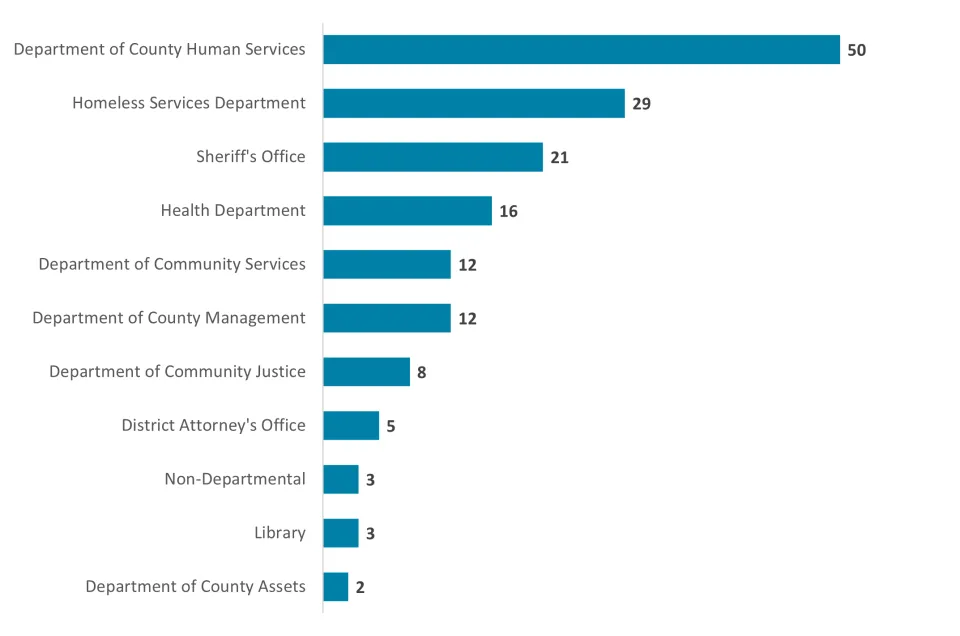
It is important to note that the numbers presented here are not all complaints. These numbers demonstrate the total number of cases involving each department. While some cases were about complaints about county programs or services, the Ombudsperson receives reports for a variety of reasons, including requests for appropriate contacts, assistance, information, and more.
Similar to 2024, we addressed cases for all county departments. Of these, all departments saw an increase in number of cases except for the Department of Community Services, which saw a decrease from 21 cases in 2024 to 12 in 2025.
Ombudsperson cases increased in 2025 for every department, except the Department of Community Services
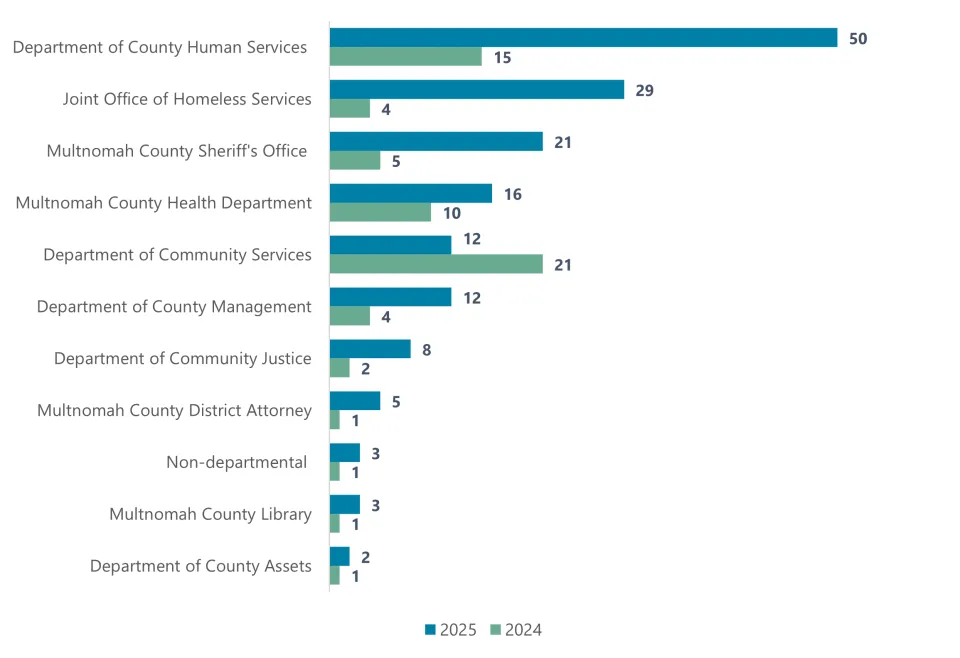
Compared to 2024, the Ombudsperson saw a significant increase in reports and cases. In 2024, we handled 65 county-related cases, and in 2025, we handled 161 county-related cases. We believe the increase is due to a growing awareness of our services among county employees and with the public since the creation of the Ombudsperson function in the Multnomah County Auditor’s Office in 2023.
We are committed to assisting people whose reports fall within our scope and jurisdiction. If a report is outside our scope, we make every effort to connect the individual with alternative resources that can provide assistance.
Highlights: Examples and Summaries
The Ombudsperson team addresses a variety of reports, ranging from information requests to reports of serious issues and concerns, such as those affecting basic needs like access to food, clothing, and shelter. This responsibility requires an engaged approach to maintaining collaborative relationships across the county. Whether the team receives phone, email, online, or in-person inquiries, the Ombudsperson determines the appropriate courses of action for each report.
The following case example summaries demonstrate the various ways the Ombudsperson works and connects with people who seek our services.
Example #1: Neutral Third Party
A community member contacted the Ombudsperson on the recommendation of a County Commissioner. The person was concerned about a communication they received from managers of an advisory committee for a county department. The concerns were non-specific, but the community member felt afraid to meet with program staff alone. The Ombudsperson reached out to the community member to discuss their concerns. The Ombudsperson then met with department leaders and staff, and it was clear there were issues between the county and the community member that needed to be resolved.
The Ombudsperson followed up, offering to facilitate a conversation between the county and the community member. The community member did not respond, but the Ombudsperson worked with the Office of Community Involvement to help provide support to the department as they worked to smooth out communications at their advisory committee meetings. The Office of Community Involvement and the Ombudsperson advised the department to use their bylaws and the county’s mission and values statements to facilitate cooperation at their meetings. The Ombudsperson also offered to attend one or more of the meetings in person to observe the reported behavior and assist the department in enforcing the boundaries they set for participants and to uphold Multnomah County’s mission and values.
Example #2: Taking Action
An employee performing routine telework did not receive a monthly allowance for employees who routinely work remotely. They worked in the position for over one year without receiving the allowance. The employee contacted the Ombudsperson for assistance and through sustained communication with Human Resources, helped the employee receive back pay for the months they performed routine telework without receiving the monthly allowance that was due to them.
Example #3: Strengthening Connections
The Ombudsperson received a referral from the City of Portland Ombudsman about a person who was removed from a county-funded shelter without all of his clothing. The person requested assistance getting some socks and undergarments. The Ombudsperson connected the person with a county contact who could arrange to take the person shopping and buy them the requested items, plus additional clothing, including a winter coat. This example highlights the importance of relationship building within the county government. The Ombudsperson often helps people by knowing where to look for resources.
Example #4: Referrals
When the Ombudsperson is contacted by someone and we are not able to help directly, one way we can help is by making effective referrals. When we receive reports that fall outside of our jurisdiction – meaning they do not relate to a Multnomah County department, program, or service – we do our best to connect people directly with the appropriate resource.
Within the county, referrals can help in urgent matters requiring assistance with immediate needs like food, clothing, and shelter, as well as resources for long-term physical and mental health needs. Outside the county, a good referral can help people locate critical medical, legal, and financial resources for things like rent, utilities and food.
As jurisdiction plays a major role in our ability to help, we refer people to the City of Portland Ombudsman’s Office as needed, as well as receive referrals from that office. A strong working relationship between our two offices helps bridge the gaps some people encounter when trying to find solutions to their concerns.
We strive to assist every person who reaches out to us, and referrals are one of our best tools for issues that are not related to Multnomah County programs and services. To that end, we maintain a comprehensive list of resources that is updated frequently. Additionally, we establish and maintain strong internal and external professional relationships so that our referrals can be successful.
Looking Ahead
The Ombudsperson looks forward to increased visibility in the community in 2026 and strives to be present at community engagement opportunities. Continuing to build relationships with internal and external partners will increase our ability to help the greatest number of people who contact us.
Photo Credits
Report photos by Multnomah County Auditor’s Office.
Staff
Cheryl Taylor, JD, County Ombudsperson
Gelsi Tuz-Uxul, County Ombudsperson Intake Specialist