While no one can say with absolute certainty what kind of weather this summer will bring, experts are already flagging “hotter-than-normal” temperatures across much of North America.
How that unfolds in the Pacific Northwest remains to be seen, but one thing is clear: Taking steps toward preparedness — no matter how small or big — can make a meaningful difference.
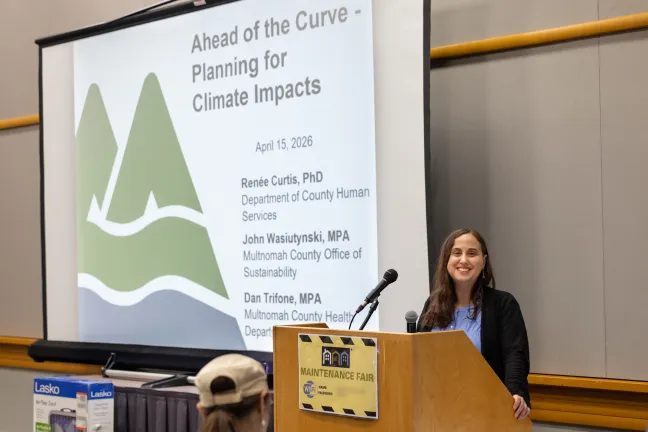
That was one of several messages from “Ahead the Curve: Planning for Climate Impacts,” an April 15 presentation by experts from Multnomah County's Department of County Human Services (DCHS), Health Department and Office of Sustainability.
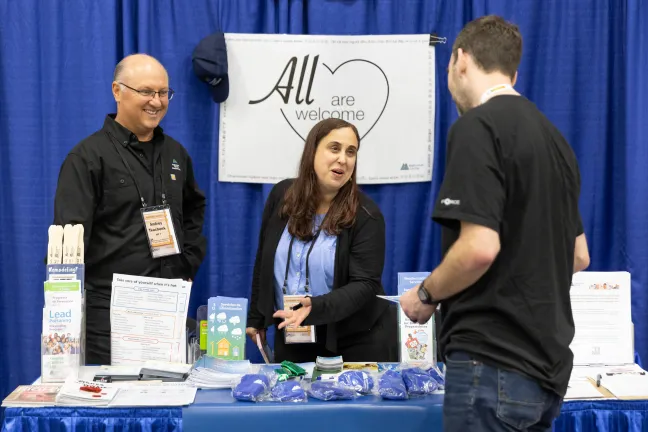
The session was part of Multifamily NW’s Annual Maintenance Fair at the Oregon Convention Center. This year’s gathering focused on awareness, resources and summer planning — addressing not only heat but also wildfires, smoke, floods, landslides and earthquakes, all of which increasingly affect our region.
“Cascadia [earthquake] events occur on average every 250 years,” said Dr. Renée Curtis, senior emergency manager specialist with the Department of County Human Services. “We know this as predicted through climate experts, tree rings and sands, and also in the stories passed down by Native communities. But it’s been 325 years since our last earthquake.”
“We also know that resilient communities are most likely to endure disasters — and preparedness is key.”
Ahead of the summer season, County Human Services staff reach out to hundreds of property managers across Multnomah County to help them prepare for extreme heat. Staff provide tips, resources and information about energy efficiency programs, water leak repairs, tenant support and more.
While the fair’s primary audience is maintenance professionals and property managers, the information County representatives shared can apply to anyone — especially as the region approaches its first hot day of the season, which can happen as early as June.
“We’re really concerned about the first shift from cool to hot,” Curtis said. “It’s the most dangerous time, because people’s bodies are not yet acclimated to the hot weather.”
Those most at risk of adverse health effects from heat are:
- All older adults who live alone, especially older men.
- People with health conditions or those taking certain medications
- People who are pregnant or young children
- People working or living outside or without air conditioning
Still, anyone can be affected by extreme heat.
“Sometimes people don’t jump into preparedness because it can feel overwhelming,” Curtis said. “But preparing now for short events helps us be ready for larger events.”
The advice for staying safe during a heat wave may sound simple, but it’s critical: Stay hydrated, drink water, use cooling towels, avoid using the stove or oven, open windows only when it’s cooler outside and get to some place cool, if it becomes too hot where you are. Even a short break from heat can help.
Planning for larger events, including a Cascadia earthquake, an urban wildfire or even an extended power outage, is more involved but just as vital. Experts recommend storing one gallon of water per person per day, half for drinking, and the other half for washing and cooking.
Curtis recommended starting with a two-day supply and then “build what your budget, space and time allow” to get closer to the emergency water preparedness goal of one gallon, per person, per day — and work towards a two week supply.
As a general rule, even some emergency water is better than none. It’s also important to store necessary medication and nonperishable food, especially items that don’t require cooking in case of power outages.
Curtis also suggested becoming familiar with the levels of evacuation for events like fires, having a go-bag prepared if possible, keeping copies of important personal identification, and establishing a household meet up plan in advance.
Now is a good time to consider who may be most vulnerable during a disaster and may need additional support.
That could include:
- People with hearing, vision, physical or behavior health issues
- Older adults or children
- People who speak languages other than English
- Households with pets
- Those who depend on medical equipment (such as a continuous positive airway pressure (CPAP) machine)
- People who can’t leave to get supplies
- People with chronic health conditions or mobility limitations
- People at risk of losing their homes (e.g., for financial reasons), could lose the protection home provides.
Community members can also connect to the County’s Aging Disability and Resource Connection Helpline at 503-988-3646, which offers 24/7 support for those concerned about an older loved one.
Energy is key
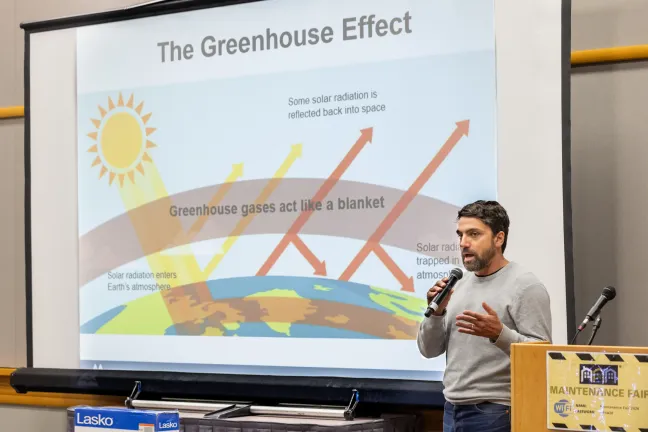
John Wasiutynski, Office of Sustainability director, described the root causes of the hotter summers increasingly affecting the Northwest.
“Our climate is getting hotter, and that’s driving changes in our weather patterns,” said Wasiutynski. “And that’s because we’ve been burning fossil fuels now for over a century. As we combust those fossil fuels, it releases carbon dioxide and other pollutants. And as carbon dioxide builds up in the atmosphere, it acts as a blanket.“
While some carbon dioxide is necessary, too much can mean hotter summers, explained Wasiutynski. Unprecedented hot weather, especially early in the season when people’s bodies are not yet acclimated, can occur as early as June or sooner, and can be dangerous.
Hotter conditions also contribute to drier forests, increasing the risk of wildfires and smoke, which are harmful to health. Smoke from those events can blow into the Portland area.
The region is also seeing more atmospheric rivers — storms with significant rain and wind — starting in the fall. Those storms increase the risks of flooding and landslides, said Wasiutynski.
The availability of electricity is key to our health and well-being during these kinds of events, he said.
“Keeping lights on, food cold, devices charged, including vital medical equipment — access to energy is life saving during hot and cold weather,” said Wasiutynski.
Utility disconnected for non-payment can even lead to eviction in some cases, said Wasiutynski.
While state rules prevent utilities from shutting off service during severe weather,
resources that can help people afford and pay their utility bills to avoid shutoffs are available:
- Utility companies’ bill discount programs
- Oregon Community Solar allows customers to subscribe to shared solar projects and receive credit on their utility bill for their portion of the energy generated by the project.
- Community-based organizations in Multnomah and other counties offer utility assistance programs.
There are also programs that provide funding to create a healthier indoor environment, said Wasiutynski. The Community Energy Project offers home weatherization kits, plastic covers for windows and more. Property managers can also reach out to Energy Trust of Oregon to learn about incentives to help offset costs for improvements made to their properties.
The health impacts
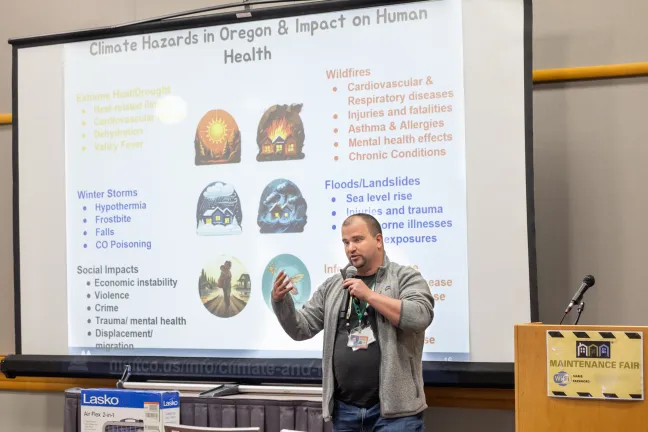
Climate Health Coordinator Dan Trifone shared how the Health Department’s Environmental Health Division is preparing for a potentially hot summer.
“We’re focusing on heat and wildfires, but many climate hazards affect our health,” he said, “from winter storms and carbon monoxide poisoning, to infectious and vector-borne diseases.”
Trifone said the region is experiencing those hazards “at levels we’ve never experienced before.”
Find additional information on Regional Climate and Health Dashboards and the Heat Vulnerability Index here
He said residents in Multnomah County can use a recently developed heat vulnerability index to measure their local heat risk and see whether they live in an urban heat island. An urban heat island is a part of the community that’s warmer than average, with features like pavement that trap heat and little tree cover or shade to shield the sun and cool the air.
And with a hot summer, Trifone said, this winter’s vanishingly small snowpack could contribute to “significant wildland fire potential,” with peak risks expected in July and August. Wildfires are deadly for those in their direct path, but the toxic smoke they produce can blanket the entire region with dangerous air.
To prepare for smoke:
- Be “smoke ready” and understand the air quality index, which is updated every day.
- Wear a well-fitted N95 mask when necessary.
- Create a clean air space in your property or your house by:
- Using a certified, portable air cleaner to run continuously on the highest settings
- Sealing windows and minimize indoor pollution
- Avoiding activities that create smoke
- Running fans or AC on circulate with a new filter
- Cleaning surfaces with a damp cloth or mop to settle dust and particles
“If you know you are at increased risk from either heat or smoke, talk to your doctor about how to prepare. If forced to prioritize between wildfire smoke and heat risks, prioritize cooling first, then smoke,” said Trifone. That means making sure your body is cool, even if it means you’ll have to expose yourself to smoky air.
During declared emergencies for heat and/or smoke, the County works with partners to open cooling spaces. Those spaces — from libraries to formal cooling centers — provide a safe, ventilated and cool place for anyone in the community.
“We have places you can cool down and get reprieve from smoke, as well,” Trifone said.
Trifone also shared instructions on how to build a do-it-yourself air cleaner:
- Attach a high-efficiency MERV 13 air filter to the back of a box fan, using either clamps, duct tape or bungee cords.
- Check for the filter for directions on the airflow (which is typically marked on the side of the filter).
- Replace the filter whenever it’s dirty.
Filters rated MERV 13 or higher are also recommended for appropriately rated residential, commercial, and industrial HVAC systems to improve indoor air quality.
Firewise is also a program that works to make properties defensible against wildfires. Getting connected to the Firewise community opens up resources on creating defensible space and grants to make a property safer, said Trifone.
The County’s experts also encouraged property managers to share resources about cooling centers and other preparations with tenants; connect with other property managers; sign up for emergency alerts; and stay informed about summer forecasts.
One attendee asked about the requirements for when building owners should provide air conditioning for their tenants. In Portland, residences where building permits for its construction were issued after March 31, 2024 are required to provide cooling in at least one room.
The Portland Clean Energy Fund provides resources to support cooling upgrades, including heat pumps, longer-term building retrofits and older properties remodels. Energy Trust of Oregon may also be able to support property owners.
During extreme weather emergencies, Multnomah County expands access to cooling spaces, including extended library hours when possible, especially during the hottest parts of the day. Community members can also find nearby cooling locations by using an interactive map at multco.us/hot.
#####