The Multnomah County Board of Commissioners on Thursday, Feb. 26 unanimously adopted a resolution proposing new policies for the County’s deflection program under House Bill 4002.
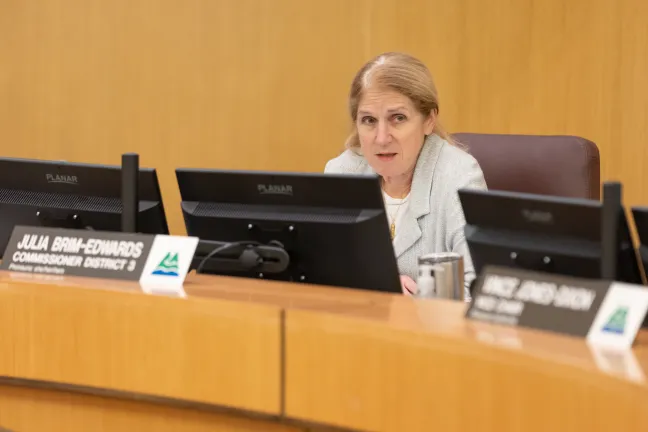
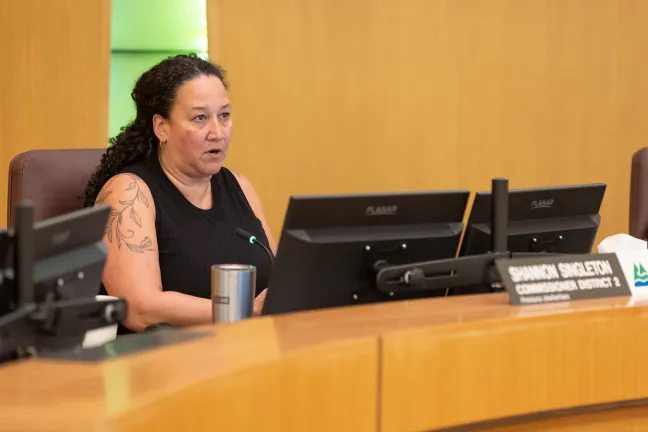
The resolution, co-sponsored by Commissioner Julia Brim-Edwards and Commissioner Shannon Singleton, follows recent updates to Multnomah County’s deflection program made by the HB 4002 Leadership Team as part of their state-mandated role managing the program. Thursday’s resolution adds more changes that would maintain and strengthen connections to treatment and housing services.
The resolution follows three Board work sessions and a deflection program briefing on data from the first full year of operations.
The County launched its deflection program Sept. 1, 2024, as a result of a state mandate following legislative changes to the voter-approved Measure 110. The program allows law enforcement to redirect individuals found in possession of small amounts of controlled substances away from jail and toward addiction treatment and recovery services.
The County operates its primary deflection program at the Coordinated Care Pathway Center at 980 S.E. Pine St. alongside a field-based pilot with community-based partner 4D Recovery and the Gresham Police Department. In June 2025, the County began allowing additional first responders and behavioral health providers to make sobering referrals.
“Looking over the actual numbers in the first year, they’re promising given the complexities that the County and other stakeholders had to undertake,” said 4D Executive Director Tony Vezina during the Board meeting. “A lot of people have been getting served and getting help.”
In its first year, the program recorded 606 referrals to the deflection program from law enforcement for 520 unique individuals. An overwhelming majority of those individuals who participated in deflection self-identified as experiencing homelessness. Moreover, a total of 1,044 referrals were made for deflection participants. Of those, 824 referrals were for substance use disorder and recovery support services, including 107 for sobering services and 234 for withdrawal management. For those who completed deflection, 81% of service referrals accessed were for substance use disorder and recovery support services.
Over the same timeframe, Oregon’s Law Enforcement Data System shows 432 arrests in Multnomah County for Possession of Controlled Substance (PCS), suggesting that law enforcement partners are deflecting more than they are arresting for possession of controlled substances.
"We believe addiction recovery is possible and know that it is not a linear path. However, deflection cannot be a revolving door into the Pathway Center and back out to the streets without a requirement for engagement with treatment services," said Commissioner Brim-Edwards. “Deflection only works when it successfully connects people to treatment, recovery, housing, and the supportive services that stabilize their lives.”
“In November, I issued a reform proposal for our deflection program,” said Commissioner Shannon Singleton. “We have to break down the silos between behavioral health and homeless services if we want to truly offer opportunities for people to be successful at recovering from both addiction and homelessness.”
Resolution sets new completion standards
Under the resolution, it is proposed that participants must have at least five care coordination contacts within 90 days—with check-in milestones at 30 and 60 days—or meaningful engagement with at least one treatment service within 90 days of entry into the program. This replaces the previous 30-day requirement that was established when the Pathway Center opened in 2024.
The resolution also supports continued access to same-day screenings either at the Pathway Center or through approved field-based deflection teams. The Board approved an amendment from Commissioner Singleton that explores hiring independent project managers to oversee the coordination of these complex services across County departments and community partners.
The resolution also clarifies that if a deflection participant leaves the Pathway Center before completing a screening or assessment, the District Attorney may file charges.
Strengthening service connections
The resolution improves connections to the full continuum of addiction treatment and homeless services, including prioritized access to medically assisted treatment, detox facilities, and service-enhanced behavioral health shelters.
In April 2025, the County added 13 temporary sobering stations at the Coordinated Care Pathway Center, expanding the range of services available on-site alongside deflection. The deflection program and services are slated to transition to a permanent 24/7 Sobering and Crisis Stabilization Center currently under development at 440 SE Stephens St. The new center will have up to 50 stations/beds to provide sobering and withdrawal management care and also offer medication assisted treatment and deflection services.
The resolution requests deflection continue to provide safe shuttling to and from services, as transportation is one of the core components of the model, as well as increased coordination with law enforcement, County and City staff, behavioral health network providers, and homeless services case managers to continue improving transportation services
Improving outcomes through data and technology
The resolution also requests cross-referencing of deflection program data with the Homeless Management Information System (HMIS) and the By Name List for individuals experiencing homelessness, and to develop a criminal justice data dashboard tracking arrests, referrals, program enrollments, milestone attainment, and avoided bookings. The County will also explore contracting for technology to track individual participant progress through the program.
Identifying gaps in the behavioral health continuum
Under the resolution, the County is directed to examine existing gap analyses, including research from Oregon Health & Science University, assess why individuals drop out at various points in the treatment continuum, and develop a strategic plan to increase access to withdrawal management, inpatient and intensive outpatient treatment, and transitional recovery housing. The County will also advocate to the State for additional resources to address identified gaps.
Expanding oversight and governance
The resolution proposes expanding the HB 4002 Leadership Team to include more addiction services providers and requires consensus-based decision-making. It requests quarterly reporting to the Commission on program outcomes and budget, and that any future policy changes, including eligibility criteria or success standards be approved by the Board.
In addition to the core resolution, the Board adopted an amendment from Commissioner Meghan Moyer that directs staff to present commissioners with expanded options for crisis stabilization and additional resources at the permanent facility for those requiring acute mental health and addiction services.
The Board also passed an amendment from Chair Vega Pederson that “commits to continuous improvement to Multnomah County’s deflection program and continuing to engage with constituent partners and experts to recommend policy as needed.”
Chair Vega Pederson noted that any changes to Multnomah County’s deflection program must be approved by the State of Oregon’s Criminal Justice Commission (CJC). The CJC recently approved changes similar to those included in the resolution to align the program with policy changes from the District Attorney’s Office.
Commissioner Statements
“Our entire board is engaged on a shared goal: a safer, healthier community for everyone," said Chair Jessica Vega Pederson. “Over our first year operating a deflection program, a leadership team of behavioral health and community safety partners has worked to learn from the experience and adjust as needed to improve pathways to recovery over incarceration. I’m grateful for the coordination between our Health Department and the District Attorney’s office to enact changes similar to this resolution which were approved by the state's Criminal Justice Commission earlier this week.”
”Deflection will only be as successful as the system we deflect people to,” Commissioner Meghan Moyer said. “Deflection is the beginning; it cannot be the end.” As we move forward, I see this vote as a commitment to invest in a functional treatment and recovery system, not just sobering and detox, but a continuum that reflects the individuality of everyone seeking help.”
“This resolution is our attempt to make adjustments now that we are over a year into this program,” Commissioner Shannon Singleton said. “The work is far from over and we will need to continue to be humble, open to growth, and bold so that we can ensure that Multnomah county is providing opportunities for both access to treatment and success at deflection.”
“With this resolution, the Commission is raising the bar for success and providing more time – moving from a 30 to 90-day requirement to engage with treatment services,” Commissioner Julia Brim-Edwards said. “This resolution seeks to increase positive outcomes and expands access to other resources, strengthening accountability, and ensuring taxpayer dollars are well spent.”
“I appreciate the spirit of collaboration these improvements to our deflection system have been brought forward by my colleagues, ” said Commissioner Vince Jones-Dixon “This resolution moves the needle to getting those that need addiction and mental health services in the right hands, sooner, saving us taxpayer dollars and creating a safer community.”