
issued July 2026
Report pdf
Report highlights
What we found
The Auditor’s Office follows up on audit recommendations to support county government’s accountability.
The Multnomah County Sheriff’s Office (Sheriff’s Office) implemented five recommendations:
- Recommendation #2: Expand supervisory review of classification decisions, with a focus on possible over-classification.
- Recommendation #4: Develop and implement a training program designed to reinforce the goal of informal solutions to discipline issues and to reduce the need for misconduct citations.
- Recommendation #6: Implement a use of force data collection system that will facilitate analysis of use of force incidents to identify patterns and training priorities.
- Recommendation #7: Contract with professionals in training on cultural competency as well as identifying and managing race-related implicit bias.
- Recommendation #9: Expand training for deputies on how to work with adults in custody with mental health conditions.
The Sheriff’s Office is in the process of implementing one recommendation:
- Recommendation #5: Monitor deputies’ use of misconduct citations.
The Sheriff’s Office has not implemented four recommendations:
- Recommendation #1: Delay full classification interviews for adults in custody moving into housing until 72 hours after booking.
- Recommendation #3: Eliminate the use of isolation as a disciplinary sanction for individuals with mental health conditions.
- Recommendation #8: Eliminate the use of disciplinary sanctions that involve isolation.
- Recommendation #12: Review the results of our survey of adults in custody to examine the areas of concern that adults in custody identified and implement changes to address those areas of concern.
The Sheriff’s Office and the Board of County Commissioners have not implemented one recommendation:
- Recommendation #13: Explore an independent review function for jail operations, such as discipline and use of force incidents.
What the statuses mean
- Implemented – Auditee has fully implemented, or auditee has resolved the issue to meet the recommendation’s intent.
- In Process – Auditee has started implementation.
- Not Implemented – Auditee has not implemented, or does not intend to implement.
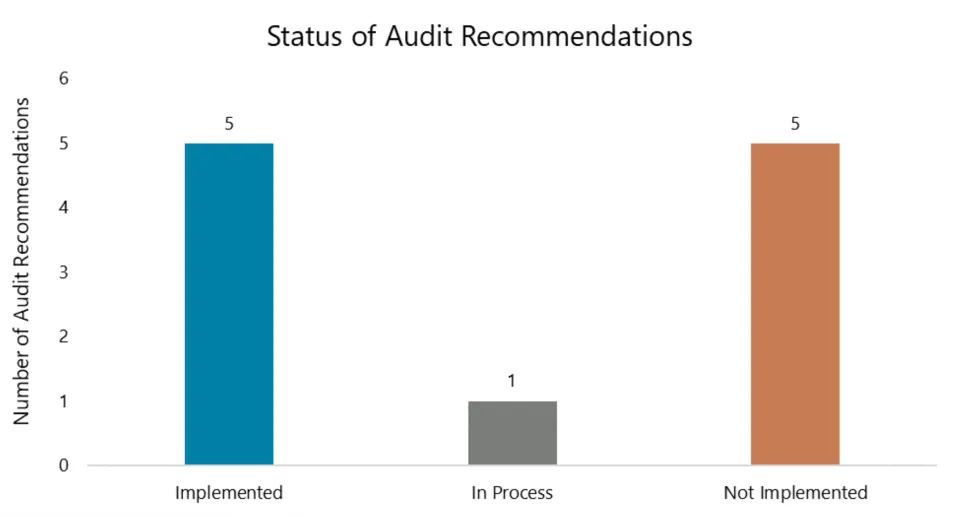
This is our second assessment of recommendations from the 2022 audit. In our 2023 evaluation, we found the following recommendations to be implemented.
- Recommendation #10: Expand the number of housing areas specifically for individuals with mental health conditions.
- Recommendation #11: Revise procedures for planned use of force activities involving individuals with mental health conditions to require participation of mental health staff.
Recommendations implemented
Recommendation #2: Expand supervisory review of classification decisions, with a focus on possible over-classification.
Auditor’s note: In jails, classification describes a process jail managers use to decide where individuals will be housed and how much interaction they will be able to have with other people in the jails.
The Sheriff's Office is using a new classification software system, Northpointe. The new system prevents line staff from making overrides, which could help prevent personal bias in classification decisions. The Sheriff’s Office told us that only the classification supervisors can make overrides. These override decisions are then reviewed by a lieutenant. This has resulted in 99.7% of classifications being done by the software, rather than staff.
Recommendation #4: Develop and implement a training program designed to reinforce the goal of informal solutions to discipline issues and to reduce the need for misconduct citations.
Auditor’s note: The Sheriff’s Office said they will issue a new policy in July 2026 that states, “Staff are encouraged to resolve minor rule violations informally, using AIC [Adult in Custody] counseling and verbal warnings, when practicable.” The new policy also introduces a mandatory supervisor review step, requiring accepted citations to be submitted to a Sergeant to verify that the violation and proposed sanction are valid and appropriate. The Sheriff’s Office has also conducted training for new and existing staff on de-escalation, which tries to resolve issues before they worsen.
While we found the recommendation to be implemented, we have not seen the decrease in citations that we were hoping would occur as a result. Despite the de-escalation training, we see that the number of major misconduct citations has increased in recent years.
The number of major misconduct citations has increased since 2023
Number of Major Misconduct Citations
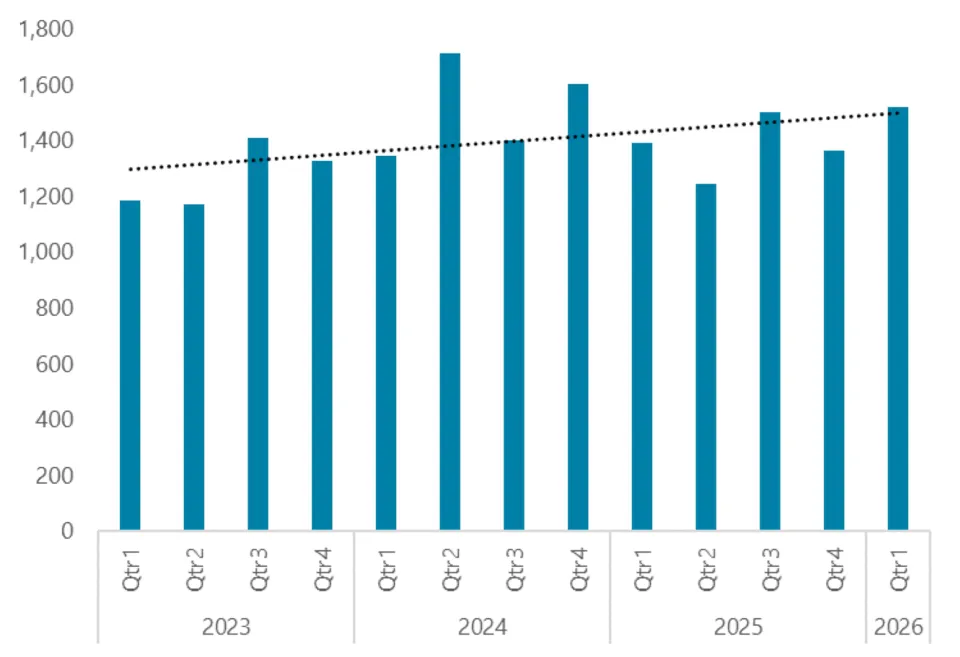
This recommendation is particularly important because misconduct citations result in solitary confinement 91% of the time. Since recommendations about eliminating solitary confinement have not been implemented, reducing these initial citations is a necessary first step in reducing the harmful impacts of solitary confinement.
Recommendation #6: Implement a use of force data collection system that will facilitate analysis of use of force incidents to identify patterns and training priorities.
Auditor’s note: A new use of force reporting system, Benchmark, went live in June 2023. The system allows the Sheriff's Office to track specific use of force details, identify patterns, and adjust training accordingly. They have already used the system to identify issues and change documentation procedures.
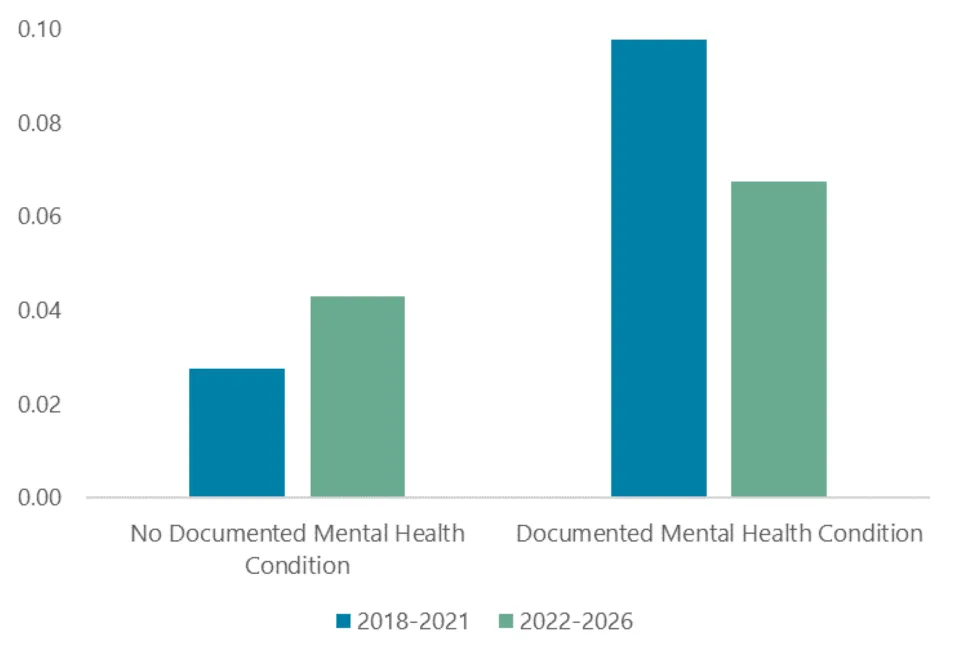
Since our last audit, the rate of use of force has declined slightly. However, current data confirms that race and mental health conditions are still a significant predictor for use of force in the jails.
Corrections staff use force on Black adults in custody 1.7 times more often than on White adults in custody
Rates of use of force per 100 people for each day in jail
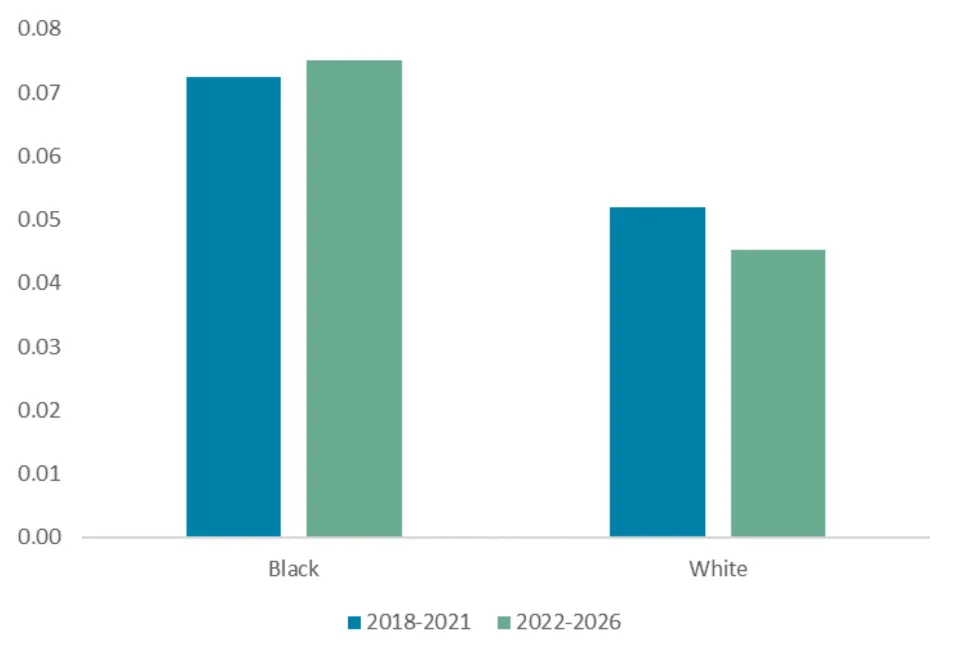
The rate of use of force for those with documented mental health conditions declined from the time of our original audit, but is still higher than for those without a documented mental health condition.
Corrections staff use force on adults in custody with documented mental health conditions 1.6 times more often than on adults in custody without documented mental health conditions
Recommendation #7: Contract with professionals in training on cultural competency as well as identifying and managing race-related implicit bias.
Auditor’s note: The Sheriff's Office said that they hired equity staff to build training capacity. The Sheriff’s Office also said they facilitated several hours of bias and anti-discrimination training. Management noted they look forward to further expanding training, which will include contracting with community professionals.
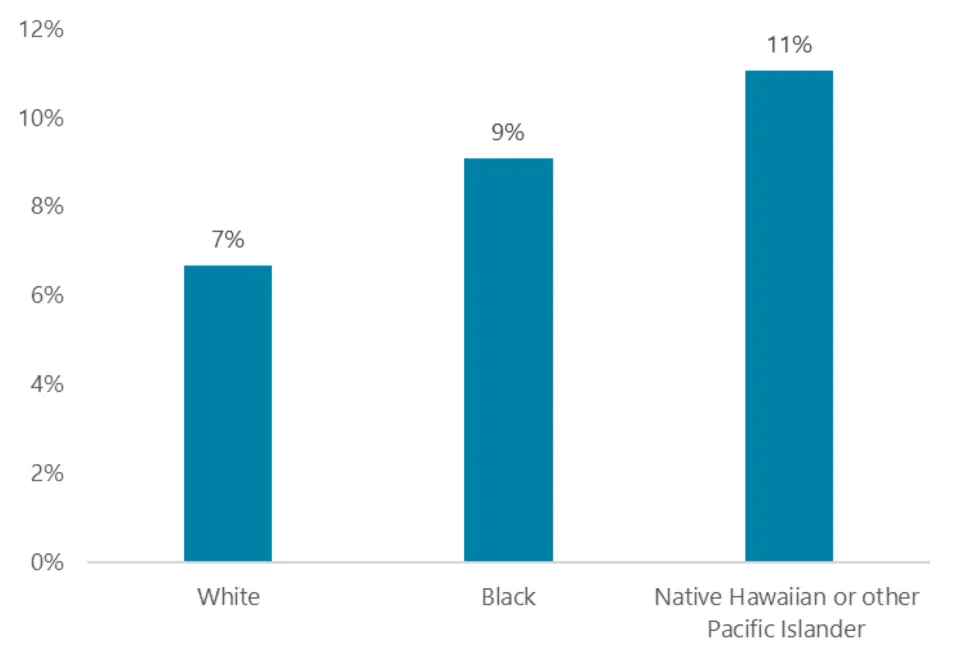
We commend the Sheriff’s Office for their efforts to expand cultural competency and race-related implicit bias training. However, current data confirms that race is a significant predictor for outcomes in the jails. Black and Native Hawaiian or other Pacific Islander adults in custody are more likely to be in solitary confinement than White adults in custody. We found the difference to be statistically significant, meaning it was not likely the result of chance.
Black and Native Hawaiian or other Pacific Islander adults in custody spent a higher percent of time in solitary confinement
Average percent of jail time spent in solitary confinement
Recommendation #9: Expand training for deputies on how to work with adults in custody with mental health conditions.
Auditor’s note: The Sheriff's Office reported providing over 20 hours of mental health training to new recruits. In addition, the Sheriff’s Office stated that they conducted 11 hours of mental health training per person over the last three years, greatly exceeding state-mandated requirements.
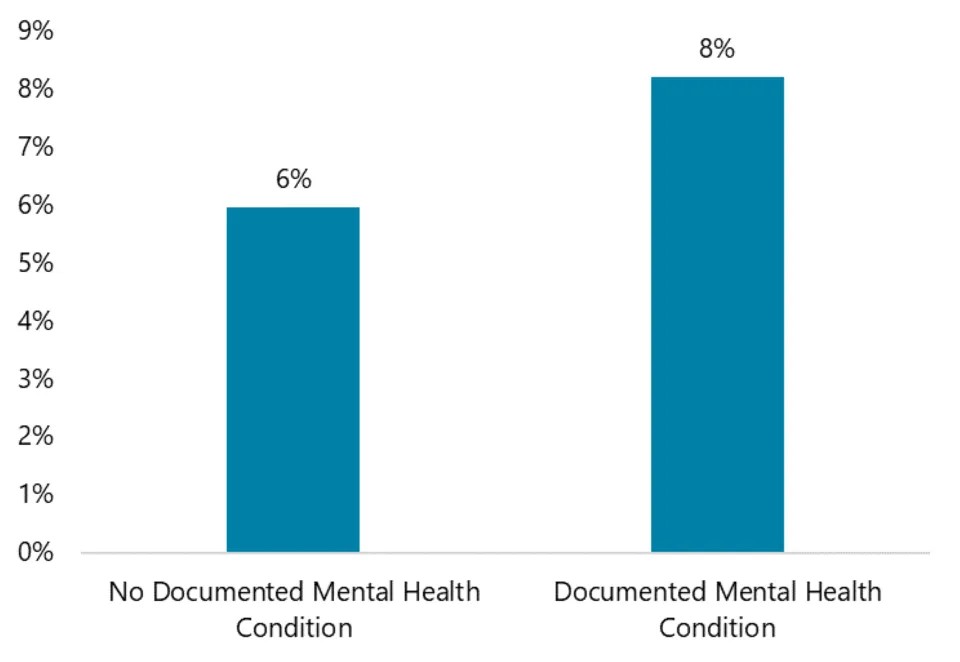
We are pleased to see that the Sheriff’s Office exceeds state mandated requirements. While this is an improvement, we still see that those with documented mental health conditions spend more time in solitary confinement, which is not a recommended practice. See Recommendation #3 in the Recommendations Not Implemented Section for more details.
Those with mental health conditions spent a higher percent of time in solitary confinement
Average percent of jail time spent in solitary confinement
Recommendations in process
Recommendation #5: Monitor deputies’ use of misconduct citations.
Auditor’s note: The Sheriff’s Office said that they are waiting for the new software to fully roll out to do more monitoring of misconduct citations. In the meantime, the Sheriff's Office said that they review misconduct citations twice a year to identify staff with unusually high or low citation levels. They said that they offer staff training when issues are found.
Recommendations not implemented
Recommendation #1: Delay full classification interviews for adults in custody moving into housing until 72 hours after booking.
Auditor’s note: The Sheriff's Office stated they have not delayed these interviews. They implemented a new classification system and do not want to wait 72 hours to classify people because they need to know where the most appropriate housing is right away. They do conduct a second interview after arraignment if necessary. Additionally, they said that if an adult in custody does not appear to be in a good state to be interviewed, staff will come back 24 hours later.
The initial audit recommended this because:
- A large number of adults in custody are released within 72 hours, which means that staff spend a lot of time interviewing people who will be released shortly.
- Removing an in-depth classification interview will speed up the booking process.
- The Sheriff’s Office can conduct the interviews with more privacy for the individual, increasing the likelihood that they will share important information about any vulnerabilities they have.
- Waiting for 2-3 days post-booking allows for individuals that come into booking under the influence of substances to be better able to answer the classification survey questions.
We understand the Sheriff’s Office needs to classify people immediately. However, officially shifting the heavy lifting of the in-depth interview to 72 hours post-booking will ensure better data quality, protect vulnerable individuals, and save valuable staff hours on those who are quickly released.
Recommendation #3: Eliminate the use of isolation as a disciplinary sanction for individuals with mental health conditions.
In the 2022 Jail Conditions Audit, the Sheriff’s response letter read,
“The corrections disciplinary process currently employs a range of sanctions that include imposed limitations of walk time outside the adult in custody’s cell from 15 to 60 minutes per day. The Audit Report collectively refers to these various levels of restrictive housing under the umbrella term “isolation,” as it is useful for objectives of the Audit Report. However, while the Audit Report uses this term, MCSO does not practice isolation, as it is commonly understood by the public nor as it is used in corrections vernacular, as a disciplinary sanction. The range of time-bound sanctions employed by MCSO is not comparable to “prolonged social isolation,” which the National Commission on Corrections Healthcare describes as being “antithetical to the goals of rehabilitation and social integration.””
More recently, interviews with the Sheriff’s Office staff indicate that they prefer the terms “restrictive housing” or “disciplinary housing” as they do not believe they practice isolation.
The Sheriff’s Office’s practices do constitute isolation according to the standards of several well-respected organizations. The first standard comes from the National Commission on Correctional Healthcare (NCCHC), whose mission is, “To improve the quality of health care in jails, prisons, and juvenile confinement facilities. NCCHC is supported by the major national organizations representing the fields of health, mental health, law, and corrections.”
Their definition of solitary confinement is “the housing of an adult or juvenile with minimal to rare meaningful contact with other individuals. Those in solitary confinement often experience sensory deprivation and are offered few or no educational, vocational, or rehabilitative programs. Different jurisdictions refer to solitary confinement by a variety of terms, such as isolation; administrative, protective, or disciplinary segregation; permanent lockdown; maximum security; supermax; security housing; special housing; intensive management; and restrictive housing units. Regardless of the term used, an individual who is deprived of meaningful contact with others is considered to be in solitary confinement.”
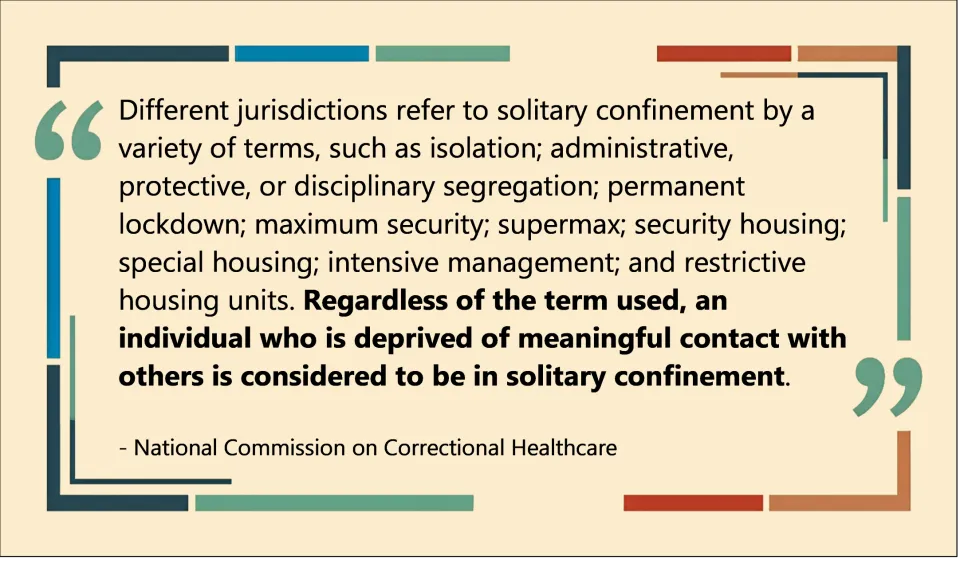
The National Commission on Correctional Healthcare issued a position statement and their first two positions are:
- Prolonged (greater than 15 consecutive days) solitary confinement is cruel, inhumane, and degrading treatment, and harmful to an individual’s health.
- Juveniles, mentally ill individuals, and pregnant women should be excluded from solitary confinement of any duration.
Data show that people have been sanctioned to solitary confinement in the Multnomah County jails for more than 15 days hundreds of times, and those with mental health conditions have been disproportionately affected. In fact, despite making up a smaller portion of the jail population, adults with mental health conditions were subjected to prolonged solitary confinement 1,282 times, compared to 951 times for the rest of the population.
Solitary confinement and prolonged solitary confinement are widely used, particularly for those with mental health conditions
| Mental health condition documentation | Number of adults in custody | For those sanctioned, average number of days in solitary confinement | Percent who spent time in solitary confinement
| Percent who spent time in prolonged solitary confinement (more than 15 days) |
|---|---|---|---|---|
| No mental health condition documented | 18,207 | 30 | 7% | 3% |
| Mental health condition documented | 6,549 | 38 | 21% | 10% |
Source: Data from Multnomah County Sheriff’s Office and analyzed by Multnomah County Auditor’s Office. The data provided was from July 1, 2022 to April 30, 2026. The number of adults in custody is a unique count. The mental health condition is documented by Sheriff’s Office staff and may not reflect everyone with mental health conditions.
An additional definition of solitary confinement comes from the United Nations Standard Minimum Rules for the Treatment of Prisoners, which are also known as the Nelson Mandela Rules. Their definition is, “Solitary confinement shall refer to the confinement of prisoners for 22 hours or more a day without meaningful human contact. Prolonged solitary confinement shall refer to solitary confinement for a time period in excess of 15 consecutive days.”
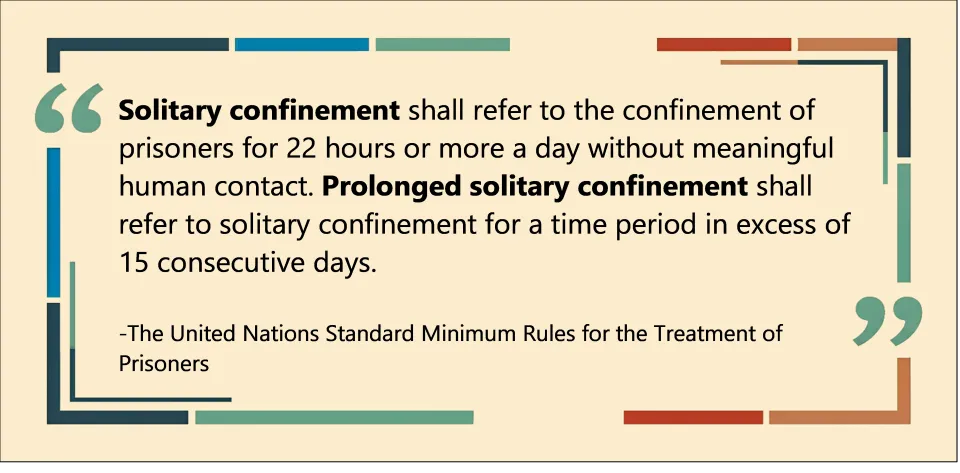
The following table compares the Sheriff’s Office disciplinary housing practices with the standards and definitions established by the National Commission on Correctional Health Care (NCCHC) and the United Nations (UN).
The Sheriff’s Office disciplinary housing practices differs from NCCHC and UN
| Policy Area | Sheriff’s Office Disciplinary Manual | NCCHC Position Statement | UN Standard Minimum Rules |
|---|---|---|---|
| Definition of solitary confinement | Utilizes "disciplinary housing" where adults in custody are confined to their cells for 23 to 23.75 hours a day, depending on disciplinary level.
| Defines it as housing with minimal to rare meaningful contact with others, regardless of whether it is called isolation, disciplinary segregation, or restrictive housing. | Defines it as the confinement of a prisoner for 22 hours or more a day without meaningful human contact. |
| Maximum duration | Allows disciplinary segregation for up to 30 days for a single violation, and up to 60 days for multiple violations per incident. | States that solitary confinement should never exceed 15 days, because, after that, some of the harmful psychological effects of isolation can become irreversible. | Prohibits "prolonged solitary confinement," which is defined as lasting in excess of 15 consecutive days. |
The Sheriff’s Office is planning to issue a new policy in July 2026 that decreases the amount of confinement to 22 to 23 hours. This is a step in the right direction, but it still constitutes solitary confinement.
Extensive research also shows that solitary confinement can be harmful to mental health. Researchers at the Montreal Mental Health University Institute and the University of Montreal analyzed 13 studies regarding the mental health and mortality impacts of solitary confinement. They looked at 382,440 adults in custody with 23% having been in solitary confinement. The researchers found strong correlations between solitary confinement and worsened general mental health, anxiety, depression, self-harm, and mortality—particularly suicide.
Recommendation #8: Eliminate the use of disciplinary sanctions that involve isolation.
Auditor’s note: See Recommendation #3 above.
Recommendation #12: Review the results of our survey of adults in custody to examine the areas of concern that adults in custody identified and implement changes to address those areas of concern.
Auditor’s note: The Sheriff's Office has been working with Corrections Health to create a survey of adults in custody, but it is still in progress. While developing a survey is an important way to learn about the needs of adults in custody, it is different from reviewing the results of the survey that the Auditor’s Office conducted and implementing changes to address those areas of concern.
Recommendation #13: Explore an independent review function for jail operations, such as discipline and use of force incidents.
Auditor’s note: This recommendation is for both the Sheriff’s Office and the Board of County Commissioners. The Sheriff’s Office cited existing reviews of jail operations, such as the state-mandated review by the Corrections Grand Jury and the review by the Oregon Sheriff’s Office Association for compliance with its jail standards. Additionally, Measure 26-233 passed in 2022 and adds a required inspection by Multnomah County Commissioners volunteers. While important, none of these reviews address the recommendation.
As we said in our 2022 audit, adults in custody would benefit from an ongoing independent review board, particularly for discipline and use of force incidents. These particular matters must be dealt with quickly and cannot be easily addressed by outside agencies that generally do annual reviews. For example, hearings officers run discipline hearings. While hearings officers are not part of the facility chain of command, they are still employees of the Sheriff’s Office, which could be perceived as an inherent conflict of interest. According to the National Institute of Corrections, the process must be perceived as being fair – even when individuals disagree about specific incidents.
Objectives, scope, & methodology
The objectives of this evaluation were to determine the status of recommendations from the Jail Conditions Audit that had the following due dates:
September 20, 2022
March 30, 2023
April 30, 2023
Our 2023 Recommendation Status Evaluation found the following recommendations to be implemented:
- Recommendation #10: Expand the number of housing areas specifically for individuals with mental health conditions.
- Recommendation #11: Revise procedures for planned use of force activities involving individuals.
Auditors evaluated the status of recommendations based on interviews, documentation, and other available evidence.
Updating the status of a recommendation
During each audit our office conducts, we develop recommendations intended to improve government operations, particularly with regard to effectiveness, transparency, accountability, and equity. Our goal for evaluating the status of recommendations is to help ensure management implements these recommendations for improvement.
We recognize that after we publish an evaluation on the status of recommendations, management may fully implement a recommendation that we reported was in process or not implemented. Management can then provide evidence to the Auditor demonstrating why the recommendation’s status should be changed in the Auditor’s future reporting. The final decision on whether to change any recommendation’s status rests with the Auditor.
Staff
Nicole Dewees, CIA, Audit Director